• Skip to primary navigation
  • Skip to main content
  • Skip to footer
Vaikuttavuussaatio

Vaikuttavuussaatio

Vaikuttavuussäätiö vahvistaa ja tukee huippututkimuksen vaikuttavuutta ja elinkeinoelämän yhteyksiä.

  • FI
  • EN
  • Front page
  • Funding
    • Open and upcoming calls
    • Previous calls
    • Projects funded
      • TIA Postdoc (2025)
      • TIA Seed (2024)
      • TIA Professor (2024)
      • TIA Postdoc (2024)
      • TIA Professor (2023)
      • TIA Postdoc (2023)
      • TIA (2022)
      • TIA Professor (2022)
      • TIA (2021)
      • TIA (2020)
      • Assessing the effectiveness of the new funding model (2020)
    • Grant application system
  • Foundation
    • About
    • Annual reports
    • Blog
    • Impact assessment
  • Publications
    • Impact assessment
    • Other publications
  • Contact

vaikuttavuussaatio

Our Annual Report 2022 is published

2.5.2023 by vaikuttavuussaatio

The Annual Report brings together the key events of 2022

The Finnish Research Impact Foundation’s Annual Report 2022 looks back at the events and highlights of our operations in the past year. The theme of the Annual Report is “What is research impact?”

In 2022, the FRIF took a number of important steps forward. The third round of the Tandem Industry Academia Postdoc call attracted 42 applications – funding decisions were made in August and 8 projects were funded. In autumn 2022, the Foundation piloted a new Tandem Industry Academia Professor funding scheme for professors.

At the start of the year, Rector Keijo Hämäläinen joined the FRIF Board as a new member. In the autumn, Outi Vanharanta started in a new position as a Research Impact Officer.

In the Annual Report you can read, for example, Outi Vanharanta’s views on impact and its antecedents. We have also interviewed key personnel involved in projects that received FRIF funding 2022 in order to canvass their views on the subject of research impact.


Read the Annul Report here →

Filed Under: Blog

Sometimes the highest-impact research is work whose outcomes cannot be predicted in advance

2.5.2023 by vaikuttavuussaatio

Sometimes the highest-impact research is work whose outcomes cannot be predicted in advance

How is research impact defined and understood in the day-to-day work of academic researchers and business companies? We asked people engaged in three FRIF-funded projects how they saw the meaning of impact in their work.

If a doctor knew for sure which medicine is the most effective choice of treatment for a specific cancer patient, both the patient and the health care system would stand to benefit. This is the kind of certainty that University of Helsinki researchers are looking for in a joint project with Finnadvance, a Finnish biotechnology company. The project is designed to model the patient’s immune system and cancer tissue in miniature in order to predict whether the patient would benefit from cancer immunotherapies. Immunotherapies are treatments that stimulate the body’s immune system to fight cancer. If the research team succeed in their efforts, the results could revolutionize cancer treatment. There is thus no question about the potential impact of the project.

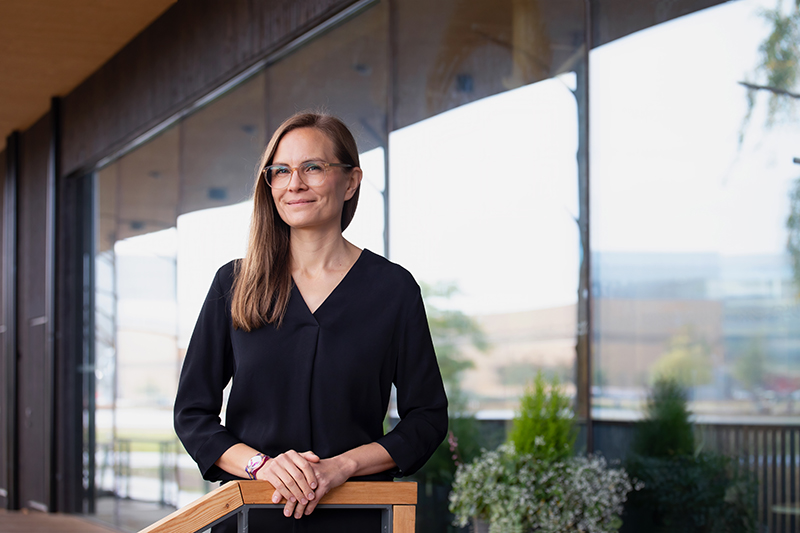
Heidi Haikala leads the University of Helsinki project “Solid-IO: Patient-relevant microfluidic platform for immuno-oncology drug testing”.

“However, there is no way for us to know whether our predictions of the efficacy of medical treatment will be borne out,” says Heidi Haikala, principal investigator of the project. The project is a close collaboration between Finnadvance and Helsinki University Hospital (HUS). Experiments similar to clinical trials are used to simulate the reality of cancer treatments as closely as possible.

As in any industry-academia project, it is difficult or close to impossible to fully predict the results of the research. But the impact of research cannot be measured only in terms of the achievement of expected results. 

“Even if we failed to achieve the result we’re looking for, the new knowledge created in the project may still have practical application in some other, even unexpected way,” Haikala explains. She believes that all research must benefit society in one way or another, but society can benefit equally from basic research and from applied research.

Maria Morits works as a post doc researcher in Aalto University’s project “Film formation mechanism of bio-colloids for sustainable coating solutions (FilmCO)”.

Postdoctoral researcher Maria Morits takes much the same position. Maria is working on a joint project between Kemira and Aalto University to explore bio-based film formation mechanisms for packaging materials. “Sometimes research results are interesting for the researcher but do not serve the company’s objectives.” Morits and her team are keen to assess the impact of the project in the light of the emerging new knowledge and new tools. “Our aim is to find methods we can use to examine film formation mechanisms of bio-based dispersion coatings. If we can do that and learn how to predict these properties quickly, easily and accurately, then the project will already have been a success.”

According to Maria Morits, the impact of a research project should not be assessed along the impactful vs non-impactful axis, but impact is the sum of different project components. One component may be successful and produce results even if another component fails. 

One way to achieve successes is for members of the research team and company representatives to meet monthly or more often to review current results. “If we feel that something isn’t quite working, we will look into that straight away and try to figure out problems as they arise,” she explains.

Juha Oksanen’s company Oksasen puutarha is a partner in the University of Turku project “Integration of greenhouse farming and microalgae bioproduction for a sustainable circular agriculture approach (AgriAlga)”.

Sometimes it may take years for the true impact of an industry-academia collaboration to become apparent, says Juha Oksanen, whose company is working in a joint project with the University of Turku. This project is aimed at creating a closed greenhouse cultivation cycle where the waste generated in production can be recycled as raw material for cultivation. At best the project could produce a number of important results that serve both research and the company’s business.

The project team are currently focused on exploring what types of microalgae can be grown in greenhouse wastewater. At Oksanen’s company called Oksasen puutarha, wastewater is typically generated in the treatment of plant growing substrates and plant debris. This is highly rich in nutrients, but it is also very dirty and may contain plant diseases. Microalgae can use the nutrients in greenhouse wastewater for their growth, and the treatment of the algae-growing equipment helps to remove plant diseases from the wastewater.

“This project allows us to monitor the quality of our wastewater in ways that we wouldn’t be able to do without research collaboration,” Oksanen says. Ultimately the results from the research will bring direct cost savings to the company.

“Municipal wastewater charges mean that wastewater is an expensive outlay for us. That’s why from a business point of view we would like to get to the point where we don’t generate any wastewater at all. At the same time we can reduce our water consumption.” Results on the cleansing effect of algae growing are expected in spring 2024.
Another possible manifestation of a project’s impact are new business opportunities created by the knowledge produced in the project. Microalgae grow very rapidly and the project is constantly producing new results on what kind of algae flourish in greenhouse wastewater. “Growing algae may emerge as a whole new business alongside greenhouse production,” Oksanen concludes.

Filed Under: Annual Report 2022

Impact requires openness, open-mindedness and a desire to understand different perspectives

2.5.2023 by vaikuttavuussaatio

Impact requires openness, open-mindedness and a desire to understand different perspectives

Industry-academia cooperation can promote the development of skills and competencies, improve society’s competitiveness and strengthen relations of cooperation. Each of these will impact upon both the business company, academic research and the broader society. For example, a scientific breakthrough achieved via industry-academia collaboration can generate new business or pave the way to more efficient procedures. These, in turn, can contribute to economic growth. But the impacts of research cooperation are diverse and not limited to the results achieved on completion of a project or to its quantifiable outputs. Research is by its very nature upredictable – there are no guarantees that the desired results will be accomplished.

In any event joint collaborations can produce diverse and multiple outcomes with major impacts, contributing via different paths to positive long-term development in academic research, business and industry and more widely in society.

For academic researchers, cooperation with business partners opens up new ways of doing research and new perspectives on how to put research results to practical use. Our interviews with researchers have shown that industry cooperation helps to provide a clearer understanding of the needs of business companies and the value and benefits of academic competencies in solving practical problems. The requirements and limitations of business have encouraged researchers to tackle and examine phenomena at different levels and from different angles. Approaching research problems from a business perspective has brought up new research subjects and opened up new publishing opportunities. 

Companies involved in FRIF-funded projects, for their part, have been keen to stress the improved understanding and competence gained in core business phenomena and the associated new opportunities. These benefits from cooperation may be reflected in the company’s R&D focus areas and competitiveness in the longer term. Companies have also made good use of the academic expertise made available through their cooperation with leading researchers. Research cooperation has strengthened existing partnerships, created new partnerships and built a stronger foundation for future innovative collaborations. 

The extent of these benefits depends upon the nature and premises of the cooperation: on how the parties involved interact in practice and on how actively they use the skills and knowledge of their research partners. Successful cooperation requires that there is a mutual desire to understand the other partner’s thinking and that there is a willingness to share one’s knowledge and expertise. For example, the researcher’s participation in the company’s team meetings provides a valuable opportunity to gain a better understanding of the wider context of operations. And if the company shows a genuine interest in academic research, that will encourage researchers to make their knowledge available to the company. Mutual appreciation and trust will make it easier to navigate between different worlds and to have constructive discussions on problematic issues.

The greater the openness and open-mindedness in cooperation, the more both parties will learn and the more ideas they will produce that can promote the development of both industry and academic research.

Filed Under: Annual Report 2022

What is research impact?

2.5.2023 by vaikuttavuussaatio

What is research impact?

In my role as CEO for the Finnish Research Impact Foundation, I have often been asked, how do we at the Foundation define and measure impact. It’s a perfectly logical question to ask, but the answer is far from simple and straightforward. Briefly, impact is about pursuing and achieving desired and substantiated change – but that really only provides the basis for more detailed discussion.

FRIF’s mission is to promote the impact of high-level academic research in Finland by supporting research collaboration with business and industry. The fundamental underlying premise is that research can significantly benefit society and that companies have a key role to play in delivering these benefits.

FRIF’s first funding call for research-driven joint projects with industry partners was announced in spring 2020, and the first two-year projects got off the ground by the autumn of the same year. But how to demonstrate or measure the impact of these projects when it was all just getting started?

At the time that we were developing our first funding programme, the thinking was that we should target our funding to areas where it had the greatest potential to deliver the greatest impact. Because cooperation has benefits for both researchers and the business company, and by the same token for academia, industry and society more widely, we decided to focus our attention on supporting that cooperation. FRIF funding was thus to fill a critical gap in the research funding system and to facilitate collaborations in areas that promised significant potential.

This was the basis on which we introduced the Tandem Industry Academia funding scheme, in which interaction and cooperation between industry and academic research is folded into the funding structure. By the end of 2022, FRIF has invested 7 million euros in grants to support a total of 36 such joint projects.

Impact also features prominently in the Parliamentary RDI Working Group’s final report in preparation of the Act on Research and Development Funding – as does the strengthening of RDI cooperation in general. Indeed, impact is listed among one of the ten key principles for the development of the Finnish RDI system. The working group observes insightfully that the impact of public R&D funding must be weighed both from the perspective of complex impact paths and in the light of the benefits achieved from short- and long-term cooperation between different stakeholders. In addition, the working group’s plan stresses that the methods needed for impact assessment should be develop integrally with the broader policy measures and funding instruments.

It is important then to take onboard the criteria of impact when new funding areas and opportunities are being discussed: Where is there untapped potential? How can impact be maximized? How should the benefits of funding to different stakeholders and its long-term impacts be measured and assessed?

Time will tell what kind of outcomes and long-term impacts will emerge from the projects supported by the Finnish Research Impact Foundation. With this in mind the Foundation has moved to hire a new Research Impact Officer: Outi Vanharanta offers some of her views on FRIF’s recent impact survey in this annual report. We have also interviewed key personnel involved in projects that received FRIF funding 2022 in order to canvass their views on the subject of research impact.
Filed Under: Annual Report 2022

Tandem Industry Academia Postdoc attracted 80 applications

22.4.2023 by vaikuttavuussaatio

The call for applications for Tandem Industry Academia Postdoc 2023 closed on 16 April and the Foundation received 80 applications. This is twice as many as last year, when 42 applications were received. The funding decisions will be made public at the end of August 2023.

The TIA funding model has been developed by FRIF with a view to encouraging ambitious research-driven projects between research organizations and companies that further the aims of both leading-edge academic research and business and industry.

This was the fourth round of TIA Postdoc funding calls. The FRIF launched the first TIA call in 2020. The foundation has funded a total of 30 TIA projects between 2020–2022, with about six million euros in funding from FRIF.

TIA funding for professors about to open up again

In autumn 2022, the Foundation piloted the TIA Professor funding for professors, with 6 professors receiving funding. The TIA Professor call is due to be re-launched in autumn 2023. More information on the call will be published on the Foundation’s website before the summer.

Filed Under: Blog

How do academic researchers benefit from industry cooperation?

7.3.2023 by vaikuttavuussaatio

Almost all new industry innovations grow out of frontline research. But how do researchers and academia benefit from their collaboration with industry partners? We asked some scientists and researchers how they had benefited from stepping outside the academic world.

“There’s been very little research on emissions in northern environments, even though the climate here is completely unique. This project will allow us to show how our short growing season and topsoil freezing and thawing impact emissions.” Mari Pihlatie, Professor of Environmental Soil Science at the University of Helsinki, says that at the moment, this information is not available anywhere.

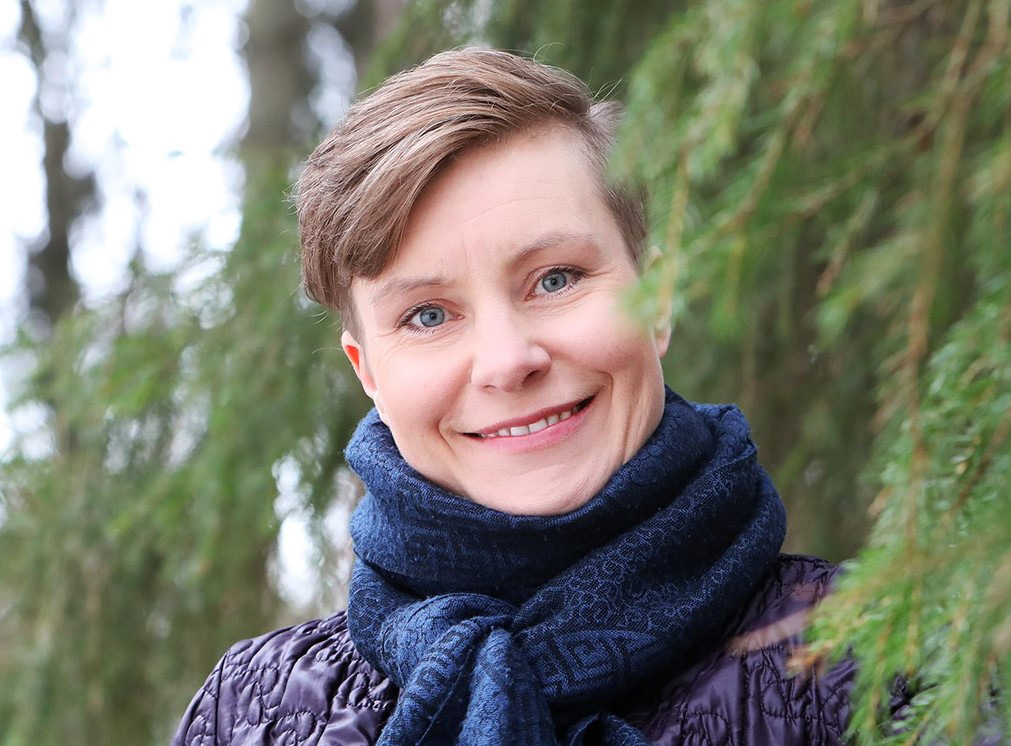
Professor of Environmental Soil Science, Mari Pihlatie, University of Helsinki.

Pihlatie is currently working on a joint project between the University of Helsinki and Valio to produce completely new information about nitrous oxide emissions from dairy production.

Understanding and cutting the carbon footprint of milk production requires in-depth knowledge about true greenhouse gas emissions from dairy farming. To this end, the University of Helsinki and Valio have turned their focus to studying nitrous oxide, which contributes significantly to dairy production emissions yet has largely been overshadowed in research by carbon dioxide. 

The collaboration between the university and Finland’s biggest diary producer has made it possible for the project to conduct regular measurements at the SMEAR-Agri station in connection with the University of Helsinki Viikki campus and at Valio grassland farms around the country. The project’s academic goal is to report the findings in leading journals in the field.

What does research-driven cooperation with industry mean?

A 2021 survey conducted by FRIF found that while industry does often work closely with academic research, this cooperation is often driven by business needs. This means that research questions are typically formulated on the basis of business interests and that only the business partner will have access to the results. There is no open exchange of information between the business and the surrounding society.

The Tandem Industry Academia (TIA) funding programme launched by the Finnish Research Impact Foundation in 2019 aims to create a different kind of setting.

Chairman of the FRIF Board, Mr Lauri Oksanen explains: “Government funding for research cooperation in Finland has been heavily geared to supporting market-driven cooperation, but we want to support industry collaborations that are grounded in researchers’ interests and that have the potential to generate creative new innovations.”

Professor Pihlatie’s project has received TIA funding worth over 200,000 euros. The purpose of the grant is to support academia-industry cooperation that is grounded in research interests and considerations.

The terms and conditions of TIA funding are such that the results of cooperation remain accessible to the academic community and thereby society at large. Likewise, the research results are accessible not just to the industry partner but to all businesses, meaning that on completion of the project the research can also be shared by some other party. 

To date a total of 36 projects have received TIA funding. Applicants stress that industry cooperation brings multiple benefits, including the opportunity to refine research ideas, to integrate different disciplines and to pursue a common goal on a level playing field. 

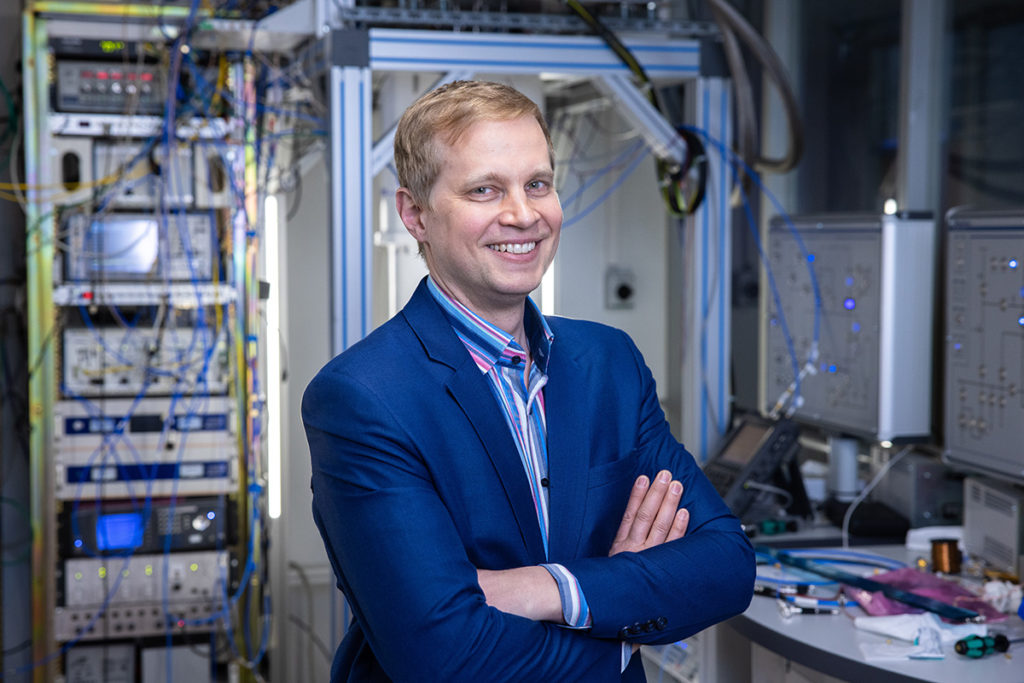
Professor Mikko Möttönen, Aalto University & VTT

“This funding will facilitate the university’s collaboration with business partners through the individual appointed to the position. This is why it’s an ideal way of exporting results produced in academic research into business companies’ products.”

– Mikko Möttönen, Professor, Aalto University & VTT

“This funding programme is a great way to combine both business and research interests. It’s also well-aligned to support our project idea as a whole. The project, its results and outcomes will benefit the business partner, the academic world and society as a whole.”

– Mika Komppula, principal investigator, Finnish Meteorological Institute

“The business partner cannot be content with knowing that the technology works in theory. It also has to work in practice. I get feedback from every version I develop, and that helps me improve the technology further. This is the kind of work you’d never get done without a company that needs to put the technology to practical use.”

– Tommi Jauhiainen, postdoc researcher, University of Helsinki

How to build a research-driven joint industry project: three tips

  1. When you talk to a potential industry partner about your research subject, step into their shoes. What’s useful and interesting about your research from their point of view? What common interests and prospects do you potentially share? 
  2. Define a clear set of goals for collaboration from the point of view of both the industry partner and academia: what benefits will there be for both parties? To this end, it’s important to have a well-defined research question. The research subject, too, must be defined closely enough so that it can be properly covered during the two-year project term. 
  3. Contact the industry partner well ahead of time to agree on practical matters, such as in-team communications and the monitoring of project progress. Also, talk openly open about any risks involved.

Join us to learn more useful tips about planning industry cooperation at the TIA application info on 1 March 2023, starting at 9:30 am. Read more and register.

Filed Under: Blog

  • « Go to Previous Page
  • Page 1
  • Interim pages omitted …
  • Page 5
  • Page 6
  • Page 7
  • Page 8
  • Page 9
  • Interim pages omitted …
  • Page 15
  • Go to Next Page »

Footer

Vaikuttavuussäätiö

Eteläranta 10, 00130 Helsinki
+358 40 767 1631
petro (at) vaikuttavuussaatio.fi

Billing Information →

  • Facebook
  • Instagram
  • LinkedIn
  • Twitter

Privacy Policy →

Copyright © 2025 Vaikuttavuussäätiö