• Skip to primary navigation
  • Skip to main content
  • Skip to footer
Vaikuttavuussaatio

Vaikuttavuussaatio

Vaikuttavuussäätiö vahvistaa ja tukee huippututkimuksen vaikuttavuutta ja elinkeinoelämän yhteyksiä.

  • FI
  • EN
  • Front page
  • Funding
    • Open and upcoming calls
    • Previous calls
    • Projects funded
      • TIA Postdoc (2025)
      • TIA Seed (2024)
      • TIA Professor (2024)
      • TIA Postdoc (2024)
      • TIA Professor (2023)
      • TIA Postdoc (2023)
      • TIA (2022)
      • TIA Professor (2022)
      • TIA (2021)
      • TIA (2020)
      • Assessing the effectiveness of the new funding model (2020)
    • Grant application system
  • Foundation
    • About
    • Annual reports
    • Blog
    • Impact assessment
  • Publications
    • Impact assessment
    • Other publications
  • Contact

vaikuttavuussaatio

New knowledge will give boost to metal processing industry

30.5.2021 by vaikuttavuussaatio

« back to Annual Report

Project title: Thermodynamic properties of aqueous transition metal sulfate solutions of industrial importance
Academic partner: University of Oulu
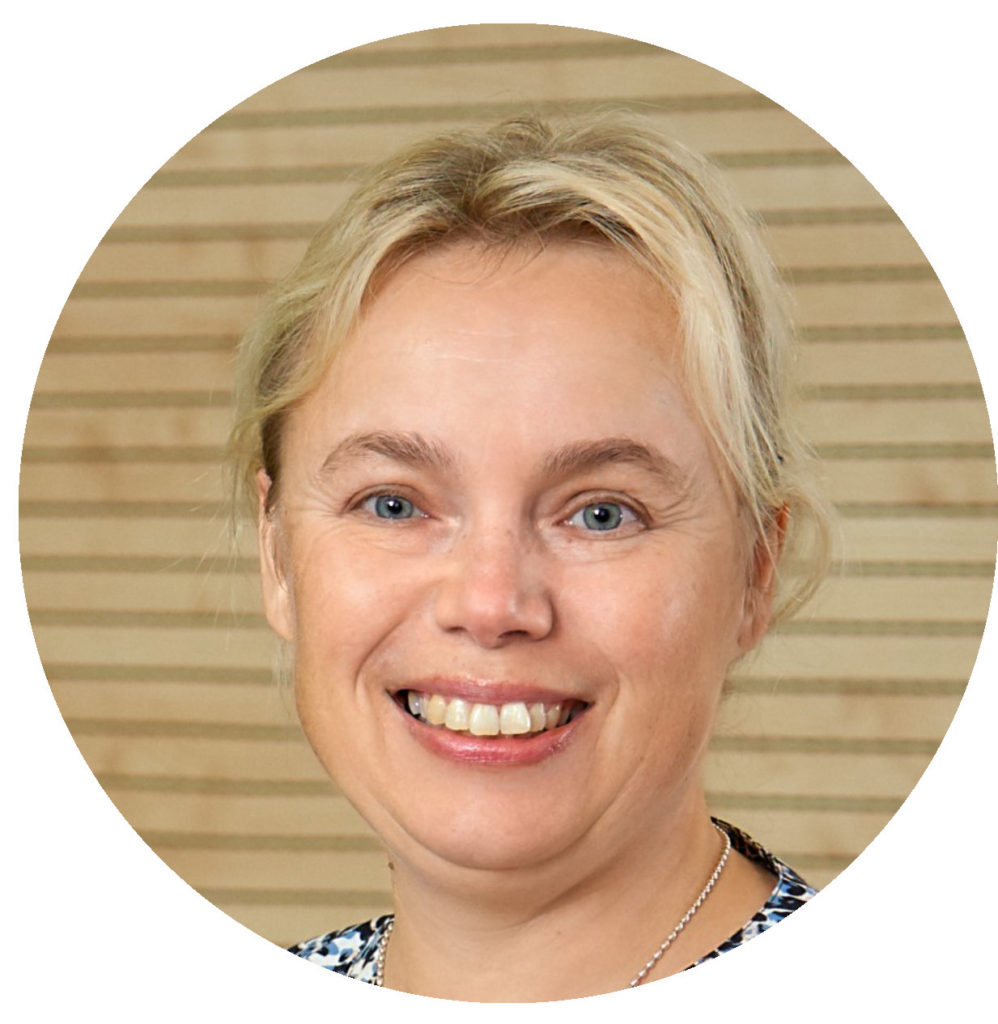
Principal investigator: Professor Ulla Lassi
Postdoc researcher: Tuomas Vielma
Industry partner: Boliden Kokkola

Scientists from the University of Oulu are working closely with Boliden Kokkola to produce new fundamental knowledge about metal sulfates, for which there is huge need both in research and industry.

Lithium-ion batteries are used to power everything from mobile phones to electric cars. The metal sulfates used in making these batteries are therefore in huge demand. Although Finland has strong traditions in the manufacture of basic metals, the properties and behaviour of metal sulfates in water are still poorly understood. “As long as we lack this fundamental understanding, it’s difficult to theoretically predict what might happen in certain processes,” says Professor Ulla Lassi, head of the Research Unit of Sustainable Chemistry at the University of Oulu.

Lassi and her team have developed equipment that can help fill in these gaps in knowledge. They are particularly interested in zinc and transition metals such as copper and nickel. Joining forces with Europe’s second-largest zinc producers Boliden Kokkola, the team are now working to develop a thermodynamic computation model that can be used to assess the behaviour of aqueous transition metal sulfate solutions in different conditions. The idea is to create a model that is applicable to different metal sulfates and that will serve different industries.

New knowledge can reshape the entire research field

The new knowledge and understanding brought about by the model may ultimately help to improve metal manufacturing processes and reduce costs and environmental burdens. “A better understanding about key properties will make it possible to reduce temperatures at certain stages of the process, to reduce loss in production and to make better use of manufacturing by-products,” Lassi says.  

Boliden Kokkola have for years been working to upgrade the materials and energy efficiency of their production processes, and collaboration with the University of Oulu promises to yield even greater efficiency. At the same time, this collaboration will generate new knowledge that has application even outside the company. All the information produced will be open-access.

Lassi believes that the field of aqueous chemistry is undergoing a major generational shift. Tuomas Vielma, the postdoc researcher on Lassi’s team, owes his expertise in thermodynamic modelling and computation to leading Australian gurus in the field, who are now in their seventies and eighties. This used to be an important line of research in Finland, and Lassi hopes that the work underway at the University of Oulu will provide a new boost to this research direction. “The information we are producing will benefit a very large number of scientists. There’s a real need for it.”

Close contacts and exchange are essential for good cooperation 

Boliden Kokkola and the University of Oulu team are working very closely together. They have at least weekly contact, and from the outset the partners have regularly exchanged views on how to further strengthen and improve their collaboration.

The project supervisor on the business side, Justin Salminen has a PhD himself. This makes it easier to find a common language. Another important asset, Lassi continues, lies in Tuomas Vielma’s excellent communications skills and his ability to talk with businesses. “Finnish companies want to work with universities so long as we don’t speak too theoretically.”

The team’s collaboration with Boliden Kokkola started in January 2021 and already they have produced publishable results. Given the high demand for new knowledge, all articles published in the project have much novelty value. Lassi has far-ranging expectations for future collaboration as well: “Once this project is completed we have two or three new projects in the pipeline that we’ll start working on together.”
Filed Under: Annual Report 2020

First full year of operations, first steps towards greater impact

30.5.2021 by vaikuttavuussaatio

« back to Annual Report

The Finnish Research Impact Foundation was created by the Finnish Government on 7 March 2019 in response to the need to stimulate cooperation between academic research and industry. The Foundation’s mission is to support closer connections between leading-edge research and business and industry in Finland and to provide a platform for the development of Finnish know-how and renewal in the long term.

The Foundation’s first full year of operations in 2020 was one full of activity – despite the challenges presented by the Covid-19 pandemic. FRIF’s first networking event and the launch of its first funding call were scheduled for 13 March 2020, two days after the World Health Organization WHO declared the coronavirus as a pandemic. This marked the beginning of working from home, and the launch of the funding call was turned into a virtual event at the last minute.

FRIF has addressed the challenge of deepening academia–industry collaboration by developing a novel funding model. The first Tandem Industry Academia funding call met with an extremely popular response: we received 92 joint applications from research organizations and business companies. Once the high-level applications had been reviewed by outside experts, FRIF’s Board of Directors decided in August to award a total of 2 million euros in funding to 11 projects. A new chapter had been opened in the field of research funding. 

In the autumn, FRIF hosted a virtual reception for our first grant recipients. We heard enthusiastic greetings from 11 top researchers about the challenges they were planning to tackle. The projects funded are concerned with burning social issues from the reduction of CO2 emissions to the development of quantum computers and more accurate methods for testing cancer drugs. They all contribute to strengthen academia–industry cooperation as postdoc researchers move between the research organization and business company. Ideally both parties make a unique contribution towards the common goal.

We expect that through the projects funded, we will be able to generate direct impacts and achieve an indirect social impact in the longer term. Furthermore, we are keen to learn more about how the impact of research can be enhanced: to undertake new experiments and to pilot new models for funding. We will continue to pursue our efforts in line with the Foundation’s recently updated strategy.

In late 2020 we also opened a second funding call to find a research team that would investigate and assess FRIF’s own funding model and to develop indicators and methods of impact assessment. We are very much looking forward to the results of this project which we expect will benefit the field of science and research funding more widely. 

In 2021 we will be moving into the post-Covid era. The past year of the coronavirus has certainly brought home the pivotal role that science plays in resolving the challenges faced by humankind and in supporting decision-makers. The need for closer collaboration between academic research and industry is only set to increase in the future. The Finnish Research Impact Foundation is keen to be involved in supporting this collaboration.

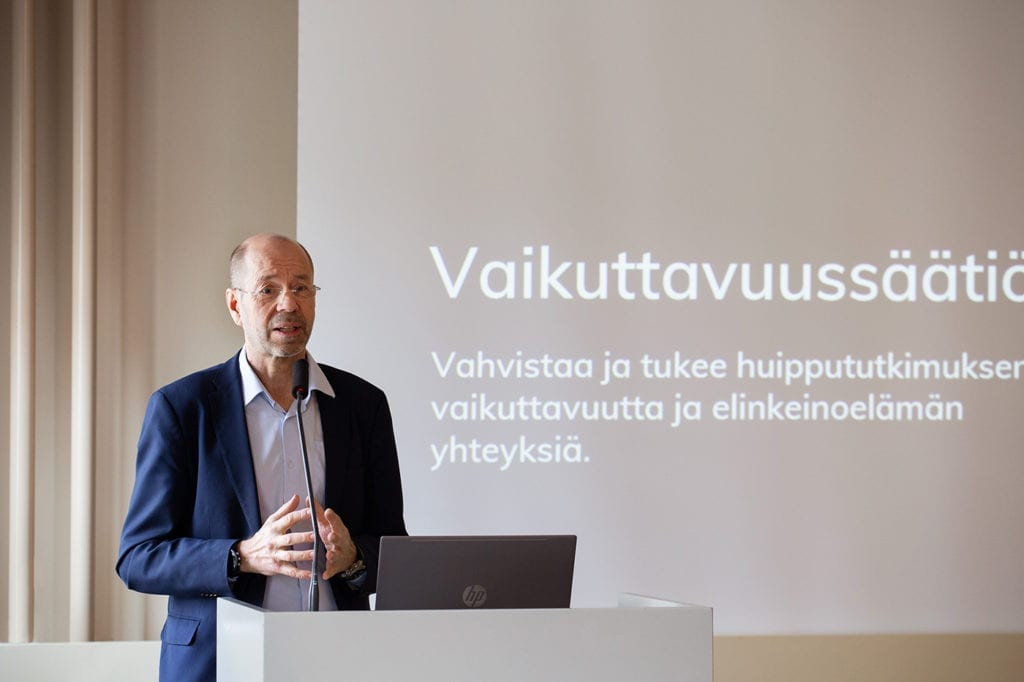
Petro Poutanen, CEO of the Finnish Research Impact Foundation

Filed Under: Annual Report 2020

Towards the growth stage and higher-impact collaboration

30.5.2021 by vaikuttavuussaatio

« back to Annual Report

The role of the board of directors in running an organization is sometimes described by reference to the stages of company evolution. In a growth company, the board needs to have the ability to develop strategic roadmaps and make choices. In a more established business, the focus shifts to reinforcing the firm’s current market position and to following the board’s annual calendar. Sometimes the routines of the board’s daily work overshadow the need to question the organization’s current direction.

The early work of FRIF’s Board of Directors, starting from its foundation in 2019 and well into 2020, may well be described as the start-up company stage: the focus is on such aspects as product development, charting the market, understanding client needs and developing a business model.

During this period we have built a foundation for the sustainable management of our investment assets, created a brand strategy, produced a communications framework, developed our administrative structure and engaged in discussions with stakeholder groups. In 2020 we launched our first “product”, the Tandem Industry Academia funding call, specifically targeted at precompetitive research cooperation between research organizations and business companies, and continued to build up networks for the new foundation.

It is never easy for a new operator to break into the marketplace. In early 2020 we registered under the auxiliary trade name of The Finnish Research Impact Foundation. This was an important part of building the Foundation’s identity and brand: we were keen to communicate a sense of impact, to create a positive and interesting image of a new player in the field, and also to challenge conventional notions of a foundation as a research funding agency. We hope that we have been successful in projecting such an image.

In late 2020 we began to look into the reasons for the slowdown in cooperation between academia and industry. Our findings indicated that in the past 10 years, long-term cooperation has been effectively hampered, among other things, by cutbacks in public research funding, which appears to be critical to research-driven innovation.

Funding can help to generate and support collaboration, but money alone is not the answer. According to our report, successful cooperation depends crucially on long-term relationships and trust. Indeed, one of FRIF’s key roles is to create new solutions and models to further deepen cooperation and interaction.

The main focus for the Finnish Research Impact Foundation right now is to facilitate collaboration between academia and industry, to “collide” the different parties as we move towards the “growth company stage”. To this end we want to invite both academic and business partners to become involved with us in building a framework that will make it possible to extract even greater impact from Finnish research excellence – to the benefit of both parties.

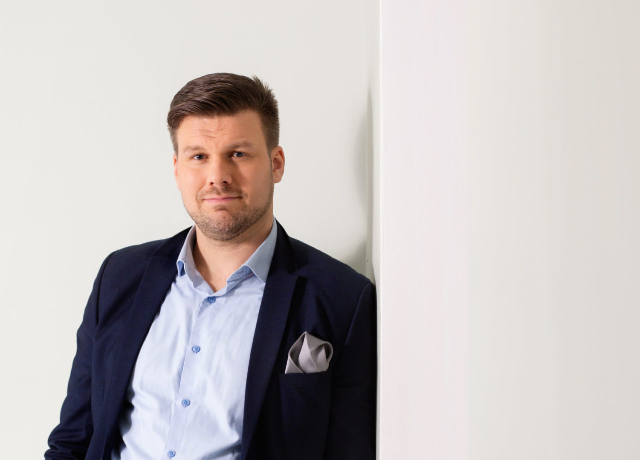
Lauri Oksanen, Chairman of the Board of the Finnish Research Impact Foundation

Filed Under: Annual Report 2020

Tandem Industry Academia 2021 attracted 80 applications – the funding decisions will be made public in August

3.5.2021 by vaikuttavuussaatio

The call for applications for Tandem Industry Academia (TIA) 2021 closed on 25 April 2021 and the Foundation received 80 applications. The TIA funding model has been developed by FRIF with a view to encouraging ambitious precompetitive projects that further the aims of both leading-edge academic research and business and industry.

This was the second round of TIA funding calls. The first TIA call in 2020 attracted 92 eligible applications, and 11 successful two-year projects received a total of two million euros in funding from FRIF.

The Foundation is looking to award funding to roughly the same number of projects in the spring 2021 call. The funding decisions will be made public in August 2021.

Filed Under: Blog

Report on business-academia cooperation attracts wide attention – publication event online

24.2.2021 by vaikuttavuussaatio

A report commissioned by the Finnish Research Impact Foundation on the current state of business-academia cooperation in Finland attracted wide attention both in the news and social media. Commentary on Twitter highlighted the continuing decline in funding from business and industry for RDI activities in the university sector since 2010 – even though research projects in Finland are funded from multiple sources.

Jointly produced by VTT Finland and Tampere University, the report was published at the beginning of February – and to date has been downloaded an impressive 631 times.

Arho Suominen (VTT Oy / Tampere University), Pirjo Kutinlahti (Ministry of Economic Affairs and Employment), Laura Juvonen (Technology Industries of Finland) and Mika Hannula (University of Turku) participated on the publication event for the report.

The slowdown of cooperation between academia and industry was widely noted in national news media and in several blog posts. For example, Riikka Heikinheimo, Director of the Confederation of Finnish Industries EK, pointed out that “if we can’t find the time to build up interaction and trust, then we also won’t find the time to align the true needs of business development with the agenda of academic research. This will frustrate both sides and cause them to drift apart.”

Another important commentary was made by Jari Hämäläinen, Chairman of Universities Finland UNIFI Vice Deans for Research. He reminded that different disciplines have different roles in cooperation and that academic career paths don’t always favour mobility between the academic world and business and industry. “All in all, I sincerely hope that universities continue to work closely with businesses and that they commit themselves to making an impact,” Hämäläinen says.

Pauli Kuosmanen, Director of Innovation Services and Partnerships at Tampere University, was likewise keen to stress the key importance of collaboration for the creation of business value and for the promotion of societal development. This is an issue that warrants serious concern. Kuosmanen believes one possible reason for the slowdown of cooperation could lie in inadequate or outdated support mechanisms: “Even the highest quality research does not automatically translate into usable business concepts, but that requires specific translation mechanisms …  it’s crucial to update existing structures and support mechanisms so that they correspond to constantly changing business needs and the demands of effective cooperation.”

Click here to download the report (available in Finnish only).

Filed Under: Blog

Live Q&A sessions for applicants to TIA 2021 spring call

14.2.2021 by vaikuttavuussaatio

The Finnish Research Impact Foundation will be live on Zoom every Tuesday at 1:00 pm to 1:30 pm, from 23 March through to 6 April. The live sessions are dedicated to answering applicants’ questions regarding the TIA 2021 spring call. You can send your questions in advance using this form. The Foundation’s CEO Petro Poutanen will be available to answer your questions.

Join us on Zoom! Link to Zoom Q&A sessions. Tuesdays 1:00-1:30 pm from 23 March to 6 April 2021.

Filed Under: Blog

  • « Go to Previous Page
  • Page 1
  • Interim pages omitted …
  • Page 11
  • Page 12
  • Page 13
  • Page 14
  • Page 15
  • Go to Next Page »

Footer

Vaikuttavuussäätiö

Eteläranta 10, 00130 Helsinki
+358 40 767 1631
petro (at) vaikuttavuussaatio.fi

Billing Information →

  • Facebook
  • Instagram
  • LinkedIn
  • Twitter

Privacy Policy →

Copyright © 2025 Vaikuttavuussäätiö