• Skip to primary navigation
  • Skip to main content
  • Skip to footer
Vaikuttavuussaatio

Vaikuttavuussaatio

Vaikuttavuussäätiö vahvistaa ja tukee huippututkimuksen vaikuttavuutta ja elinkeinoelämän yhteyksiä.

  • FI
  • EN
  • Front page
  • Funding
    • Open and upcoming calls
    • Previous calls
    • Projects funded
      • TIA Postdoc (2025)
      • TIA Seed (2024)
      • TIA Professor (2024)
      • TIA Postdoc (2024)
      • TIA Professor (2023)
      • TIA Postdoc (2023)
      • TIA (2022)
      • TIA Professor (2022)
      • TIA (2021)
      • TIA (2020)
      • Assessing the effectiveness of the new funding model (2020)
    • Grant application system
  • Foundation
    • About
    • Annual reports
    • Blog
    • Impact assessment
  • Publications
    • Impact assessment
    • Other publications
  • Contact

Blog

Live Q&A sessions for applicants to TIA 2022 spring call

14.2.2022 by vaikuttavuussaatio

The Finnish Research Impact Foundation will be live on Zoom every Monday at 11:00 am to 12:00 pm, from 7 through 21 March. The live sessions are dedicated to answering applicants’ questions regarding the TIA 2022 spring call. You can send your questions in advance using this form. The Foundation’s CEO Petro Poutanen will be available to answer your questions.

Join us on Zoom! Link to Zoom Q&A sessions. Mondays 11:00 am – 12:00 pm from 7 to 21 March 2022.
Filed Under: Blog

Rector Keijo Hämäläinen joins FRIF Board

31.1.2022 by vaikuttavuussaatio

Professor Keijo Hämäläinen, Rector of the University of Jyväskylä, has joined the Board of the Finnish Research Impact Foundation as of 1 January 2022. He has previously served as Chairman of Universities Finland UNIFI and is currently a board member of the Finnish Cultural Foundation and the Finnish Innovation Fund Sitra.

Keijo Hämäläinen has held several positions of trust both within and outside of academia. He was appointed Rector of the University of Jyväskylä in 2017, having previously served as Vice Rector at the University of Helsinki. Hämäläinen comes from a background of international physics research, and he has also been honoured for his teaching. So what is his relation to doing science?

“I’m a researcher by background as well as in terms of my thinking, and science has always been my passion. The rector’s role is one of an academic leader who must have a practical understanding of how research is done. Science and research lies at the heart of everything at university,” he says.

The Finnish Research Impact Foundation was set up by the Finnish government in 2019 to increase the impact of research and to strengthen partnerships between academia and industry. What thoughts does Keijo Hämäläinen have about the impact of science?

“You have to let science evolve under its own gravitation, but impact must not be considered an obstacle. From science’s viewpoint, progress in research is the most important impact. The results and outputs of research are then the outside impacts on the rest of society. The challenges we’re facing in the world today are so momentous that I feel science has a moral obligation to address them and to make an impact. Besides, they are all exciting and interesting scientific challenges in their own right,” Hämäläinen continues.

A report commissioned by FRIF in 2021 showed that cooperation between academia and industry in Finland has been on a downward trend over the past decade. There’s a growing drive now to turn things around: one important tool to this end is the national RDI roadmap adopted by the Ministerial Working Group on Competence, Education, Culture and Innovation. How does the Rector of the University of Jyväskylä see the state of cooperation between universities and business in Finland today?

“Finnish business and industry certainly values and appreciates the work and research we’re doing at our universities and recognizes the importance of basic research. The higher up we move in the business hierarchy, the greater the recognition of the different but complementary roles of academia and industry in producing new innovations. But of course there’s always room for improvement in the dialogue, for instance by learning what’s happening in each world and what’s most important,” Hämäläinen says.

“Some research questions are more relevant to industry than they are to academia, and finding answers to these questions can offer a fast track to achieving impact. Other questions will require a longer time window to open up research paths that can pave the way to relevant advances in science. The scales are not always aligned,” Hämäläinen continues.

FRIF’s role is to support dialogue and to promote impact. Professor Hämäläinen has a clear view of how substantial impact can be achieved.

“In essence it’s all about skilled and competent people. We must get the best talents to commit themselves to science and research and to the application of cutting edge research. Whenever there is impact to be achieved, we must have access to the means to promote that impact. Research collaborations with industry are not a secondary alternative,” Hämäläinen says.

A seat on the FRIF Board became vacant following the rotational retirement of former Vice Rector of Tampere University, Juha Teperi, who did not seek a second term on the Board. The Board of the Finnish Research Impact Foundation consulted Universities Finland UNIFI, one of the background organizations involved in founding FRIF, to request nominations for new Board members. The FRIF Board appointed Keijo Hämäläinen to the vacant Board seat on 13 December 2021, and he started his first three-year term on 1 January 2022. Under the foundation’s current rules, Board members can serve a maximum of two consecutive terms.

Filed Under: Blog

Celebrating a year of high-impact RDI – and Christmas!

23.12.2021 by vaikuttavuussaatio

As 2021 is drawing to a close it’s a good time to briefly take stock of the past year and to look forward to what the future will bring.

In spring 2021 FRIF opened the second round of the Tandem Industry Academia call for proposals. As before, we received a huge number of quality applications for projects supporting and promoting the impact of joint industry-academia collaborations. FRIF awarded funding to 11 new joint projects. In October, the Board of the Finnish Research Impact Foundation decided to open the third call for applications in spring 2022.

In early 2021 we also came out with FRIF’s first report on the state and funding of industry-academia cooperation in Finland. The report immediately prompted lively debate that continued throughout the autumn. Later in the year the Parliamentary RDI Working Group submitted its proposal for a legislative act to increase funding for research and development. At the same time, a new updated version was released of the RDI Roadmap that was published in spring 2020 to create a more attractive environment and stronger incentives for long-term cooperation between academia, business and industry, and RDI professionals. These steps are critical in a climate of toughening international RDI competition.

During 2021 the FRIF Board also announced its new strategy for the 2022–2024 term. The strategy is built around the Finnish Research Impact Foundation’s core mission, which is to improve Finnish knowledge and expertise by supporting research excellence and by developing new, impact-enhancing forms of cooperation between industry and academic research.

In other words, FRIF is not a research funding agency in the most conventional sense of the term, but it is keen to find and explore new creative avenues. Unlike larger players that can sometimes be slow and cumbersome in their movement, FRIF has the agility to develop and test out new avenues and solutions. Our focus will be shifting towards identifying funding gaps and bottlenecks in order to find novel solutions through funding experiments, for instance. In 2022, we plan to engage our stakeholders more closely in this development process.

We also have plans in place to conduct further assessments and investigations – from a slightly different angle than before. Moreover, at the start of 2022, there will be a new board personnel joining our team – but more on these will follow later.

A warm thank you for your cooperation during the past year and all the best for the future!

Wishing you all a Merry Christmas and a Happy New Year.

On behalf of the Foundation,
Petro Poutanen, CEO

Filed Under: Blog

Next Tandem Industry Academia call to open in spring 2022

2.12.2021 by vaikuttavuussaatio

The Board of the Finnish Research Impact Foundation decided at its meeting on 21 October 2021 to open the third Tandem Industry Academia funding call in spring 2022. The previous calls in 2020 and 2021 have met with a very positive reception, attracting 92 and 80 applications, respectively. In both years FRIF awarded a total of two million euros in funding to 11 projects.

There are 22 ongoing or soon-to-be-launched FRIF-funded research projects involving Finnish universities or research institutes and business partners. In these two-year TIA projects a postdoc researcher works for one year with the academic organization and the other year with the partner company.

The next, third round of calls in spring 2022 will be announced in the Foundation’s newsletter and through its social media channels. Subscribe to our newsletter by joining our mailing list at the bottom of the front page of our website so you will always stay up to date on new funding calls and other information from the Finnish Research Impact Foundation.

Filed Under: Blog

Making the most of joint industry–academia projects: some pointers

2.12.2021 by vaikuttavuussaatio

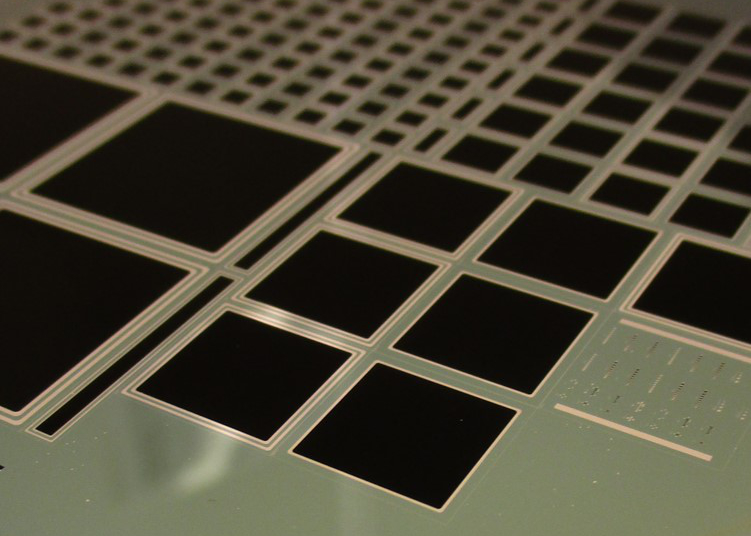
Prototypes of highly sensitive infrared sensors produced by Aalto University and ElFys. Photo: Toni Pasanen.

Infrared sensors have several important areas of application, such as in medical imaging, data communications, robotic cars and dark vision. Launched in 2020 with funding from the Finnish Research Impact Foundation FRIF, Superior infrared sensors is a two-year project where researchers from Aalto University are working closely with business partner ElFys to develop a new type of highly sensitive infrared sensor.

The project brings together the expertise of Aalto researchers on nanomaterials such as black silicon and the business partner’s know-how in components manufacturing and production. Pooling resources and expertise is an effective route to achieving challenging goals, but the success of the project also depends on how well the two partners work together.

Together with Mr Antti Haarahiltunen, project coordinator and supervisor at ElFys, the project’s Principal Investigator, Associate Professor Hele Savin and postdoc researcher Toni Pasanen from the Aalto Department of Electronics and Nanoengineering offer some useful pointers on how to make the most of Tandem Industry Academia collaborations.

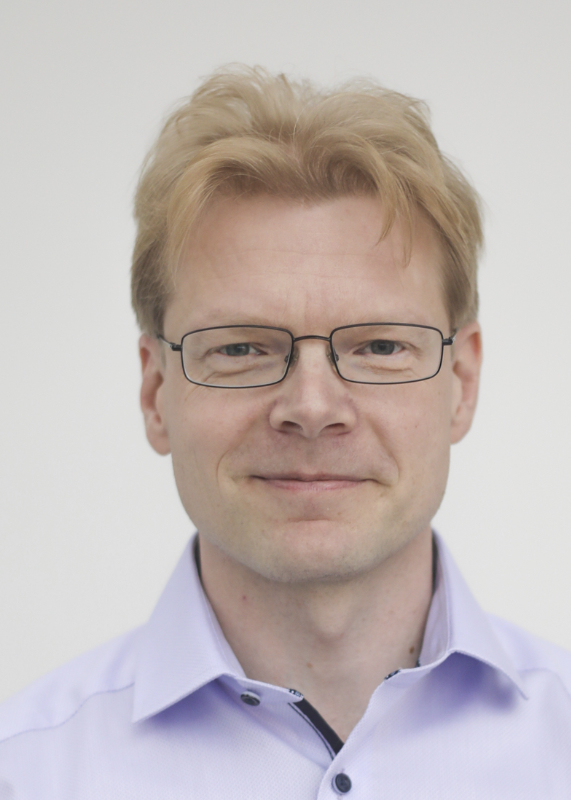
  • Hele Savin, Associate Professor, Micro and Nanoelectronics. Department of Electronics and Nanoengineering, Aalto University.
  • D.Sc. (Tech), MD Antti Haarahiltunen, CTO, ElFys Oy.
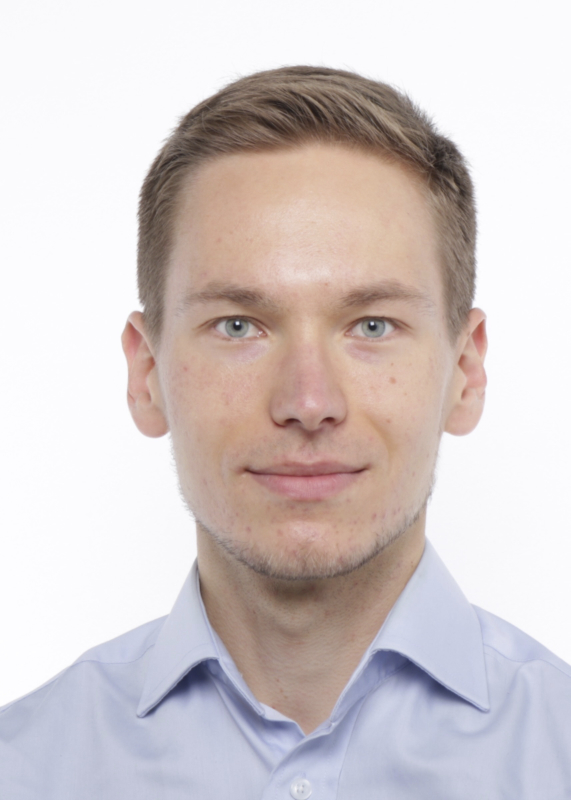
  • Toni Pasanen, Postdoctoral Researcher. Department of Electronics and Nanoengineering, Aalto University.

Get the right people in the right places

Tandem Industry Academia (TIA) projects provide a unique framework for building strong and productive collaboration between academic researchers and business partners. The key lies in getting the right people in the right places.

“I’d invest a lot to ensure that you get the right people to carry the project forward. The postdoc researcher has a pivotal role which differs significantly from what you’ll see in purely academic projects, for instance. It’s crucial that your postdoc researcher is motivated both by the research subject and by the prospect of working in an industrial environment,” says Associate Professor Hele Savin from Aalto University.

In addition to a Principal Investigator and postdoc researcher, TIA projects are to appoint an Industrial Supervisor representing the business partner and organization.

“The supervisor must be committed and devoted to working on the theme of the project but should also have an interest in doing academic research. This is because the TIA project involves close cooperation with the university and in that sense differs from regular in-house product development projects,” says postdoc researcher Toni Pasanen.

“For the Industrial Supervisor it’s definitely a plus to have experience of academic projects, both from the point of view of setting realistic goals and time use in general,” Mr Haarahiltunen adds.

Cooperation pays dividends, from the very outset

All plans submitted for TIA projects are required to include a preliminary schedule for the project where working hours are evenly allocated between the business company and the university.

“Our initial plan was for Toni to spend his first project year at the university and the second year with the business partner, but this didn’t work out as we had anticipated,” Savin says.

“We soon realized it would be much more useful if we had access to the expertise and hardware available at the business partner from the very outset. That’s why I’ve spent quite a surprising amount of time working with the company as soon as we got underway,” Pasanen says.

“I’d advise against setting down a very strict timetable. The stage of the research process may also influence the decision on whether it makes more sense to work at the university or with the company,” he continues.

Lay down the ground rules as early as possible

In any joint research project it’s important to agree on a set of ground rules concerning any immaterial rights created in the course of the project and the preparation of publications, for instance.

“We have a written agreement on immaterial rights between the university and the business partner,” Savin says.

“There are lots of practical things that you should agree upon in advance, such as communications, data sharing, timetables and the use of company equipment or other resources, but it’s also important to specify what’s regarded as confidential information and business secrets for the company: you need to cover these issues before the researcher has conducted any experiments and submitted the first scientific article for review. This will help to avoid any awkward situations arising later,” Pasanen adds.

“From the business partner’s point of view I think publishing is always a good idea, so long as the process of protecting any potentially innovative elements has been properly started,” Haarahiltunen continues.

Prepare for the post-project era

Every project will eventually come to an end. The TIA projects funded in the first and second rounds in 2020 and 2021 are scheduled to run for two years. Although the postdoc researcher in every TIA project is on the university’s payroll, it’s good to talk about what kind of future expectations the project creates for the business partner.

Associate Professor Hele Savin is keen to stress the importance of considering the postdoc researcher’s role in relation to the company once the project is completed, and doing this as early as possible: “Will the researcher be in the same position as other company employees? Is the company possibly looking to hire the researcher?”

“It’s good if the postdoc researcher gets to work as part of the team in the business partner’s organization, rather than limiting his or her interaction to communications with the supervisor in the company. It will help the researcher gain a clearer picture of what else the company is doing and what it’s like to work in the company. And this, in turn, will help to form a clearer picture of the post-project era,” Toni Pasanen says.

Antti Haarahiltunen shares a similar view:

“After the project the postdoc researcher will hopefully have a positive impression of the company and, if the situation’s right, will want to join the company. This will be more likely if during the course of the project he or she has the opportunity to see close up how the company works,” he explains. 

Maintaining close relations with the business partner is also important from the university’s point of view.

“It good to talk about how the two parties can continue their collaboration once the project is completed,” Savin says.

“It’s unlikely this research subject will be exhausted in two short years, so the collaboration can probably continue,” Haarahiltunen concludes.

Superior infrared sensors is a joint research project between Aalto University and ElFys. The project received two-year funding from the Finnish Research Impact Foundation in 2020. Click here for more information on FRIF-funded projects.

Filed Under: Blog

Science can also produce surprises

13.10.2021 by vaikuttavuussaatio

View the full statement by the Minister of Science and Culture, Mr Antti Kurvinen.

Mr Antti Kurvinen, Finnish Minister of Science and Culture, attended the reception for the latest FRIF funding recipients and gave a speech which stressed the impacts of science and research in society: the scientific discoveries that are being made today will in time translate into better future technologies. 

The Finnish Research Impact Foundation awarded more than two million euros through its Tandem Industry Academia programme to support 11 new cutting-edge research projects in 2021. The reception for funding recipients was a hybrid event hosted by FRIF on 22 September.

Discussing the short-term and long-term time frame of the impacts of science, Minister of Science and Culture Antti Kurvinen referred to the new knowledge accumulated during the global COVID-19 pandemic about the virus, its spread and treatment and about rapid vaccination development. 

“Valuable knowledge was obtained within a matter of weeks and months, and scientific research also quickly corrected itself,” the minister said.

Mr Kurvinen also commented on the recent widespread debate on the impact of science and public research funding. He pointed out that “the world is no laboratory” and that it is impossible to predict all future impacts of science and research, even though many of those impacts are direct and immediate. Often, however, they will only become apparent in the longer term.

“Science can also produce surprises,” Mr Kurvinen said.

He furthermore observed that the impact of science and the freedom of science are not opposites, just as basic research and applied research are not opposites – both are equally necessary.

“Even though it is difficult to measure the impact of research, impact is nonetheless an essential objective that we should advocate and keep on discussing,” Mr Kurvinen continued.

Recognition to FRIF

The minister emphasized in his speech that public RDI funding also has a key role to play in accelerating cooperation, but that money alone is not the solution.

“If cooperation between business life and science was essential before the coronavirus pandemic, it is now even more imperative,” the minister said.

He continued: “Skills, competence and innovation are key. This calls for a favourable environment for both research activities and business operations in our country.” 

The minister also expressed his recognition to the work done by the Finnish Research Impact Foundation in its first years of operation. Ever since its inception, Mr Kurvinen said, FRIF has made a significant contribution to advancing the impact of science both through its funding and by participating in the public debate on the subject. 

“This is exactly what the Finnish government aimed to achieve a few years ago when it decided to set up the foundation.” He concluded his speech by congratulating all new recipients of FRIF funding.

The Finnish Research Impact Foundation was created by the Finnish government in 2019 with a view to strengthening cooperation between academic research and industry. At the same time, the aim is to boost Finnish business efficiency through world-class research.

You might also be interested in reading the speech by Lauri Oksanen, Chairman of the FRIF Board, on the role of funding in supporting research and innovation »

Filed Under: Blog

  • « Go to Previous Page
  • Page 1
  • Interim pages omitted …
  • Page 7
  • Page 8
  • Page 9
  • Page 10
  • Page 11
  • Page 12
  • Go to Next Page »

Footer

Vaikuttavuussäätiö

Eteläranta 10, 00130 Helsinki
+358 40 767 1631
petro (at) vaikuttavuussaatio.fi

Billing Information →

  • Facebook
  • Instagram
  • LinkedIn
  • Twitter

Privacy Policy →

Copyright © 2025 Vaikuttavuussäätiö