• Skip to primary navigation
  • Skip to main content
  • Skip to footer
Vaikuttavuussaatio

Vaikuttavuussaatio

Vaikuttavuussäätiö vahvistaa ja tukee huippututkimuksen vaikuttavuutta ja elinkeinoelämän yhteyksiä.

  • FI
  • EN
  • Front page
  • Funding
    • Open and upcoming calls
    • Previous calls
    • Projects funded
      • TIA Postdoc (2025)
      • TIA Seed (2024)
      • TIA Professor (2024)
      • TIA Postdoc (2024)
      • TIA Professor (2023)
      • TIA Postdoc (2023)
      • TIA (2022)
      • TIA Professor (2022)
      • TIA (2021)
      • TIA (2020)
      • Assessing the effectiveness of the new funding model (2020)
    • Grant application system
  • Foundation
    • About
    • Annual reports
    • Blog
    • Impact assessment
  • Publications
    • Impact assessment
    • Other publications
  • Contact

vaikuttavuussaatio

The FRIF grants 1,5 million euros to support research impact and launches new funding

29.8.2024 by vaikuttavuussaatio

The Finnish Research Impact Foundation is awarding funding to seven top-tier research projects for research conducted in collaboration with companies. These projects have been selected based on their potential to deliver significant new insights that benefit both science and Finnish businesses.

The FRIF will fund joint research between research organizations and companies with 1,5 million euros through its spring 2024 call for proposals. This year’s Tandem Industry Academia Postdoc funding call marks the fifth time the foundation has offered this program. Since 2020, the foundation has awarded over 10 million euros to a total of 56 projects.

The funding is directed at Finnish universities and research organizations to encourage collaboration with the Finnish business sector. The foundation aims to enhance the impact of world-class science and research on society through its funding.

The newly funded projects address several societally significant challenges. These include exploring the reconciliation of forestry and environmental protection, understanding the lifecycle emissions of Finland’s road infrastructure, involving logistics service providers in circular economy business models, and addressing bottlenecks in drug development.

The research teams receiving funding come from the following institutions: Åbo Akademi University, the Natural Resources Institute Finland (Luke), Aalto University, Hanken School of Economics, and the University of Helsinki.

The partner companies will contribute their research and development expertise and industry-specific insights. These companies include Bayer, Valio, Ramboll Finland, Posti, Metsähallitus Metsätalous, Arbonaut ja Bittium Biosignals.

“Funding from the Finnish Research Impact Foundation offers a unique opportunity for Research and Technological Development by bridging the needs and expertise between academia and industry. The funding process is competitive and overall very straightforward”, says Shrikanth Kulashekhar, a postdoctoral researcher involved in a project developing a tool for dementia risk screening.
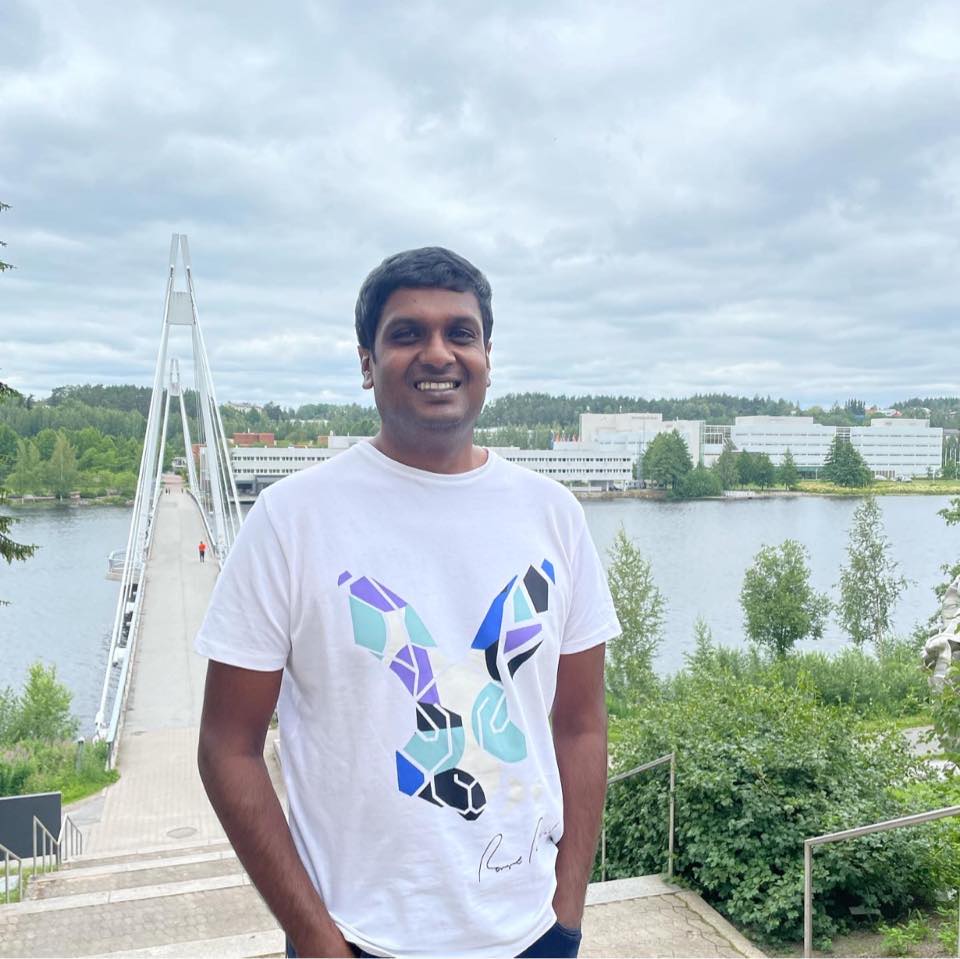
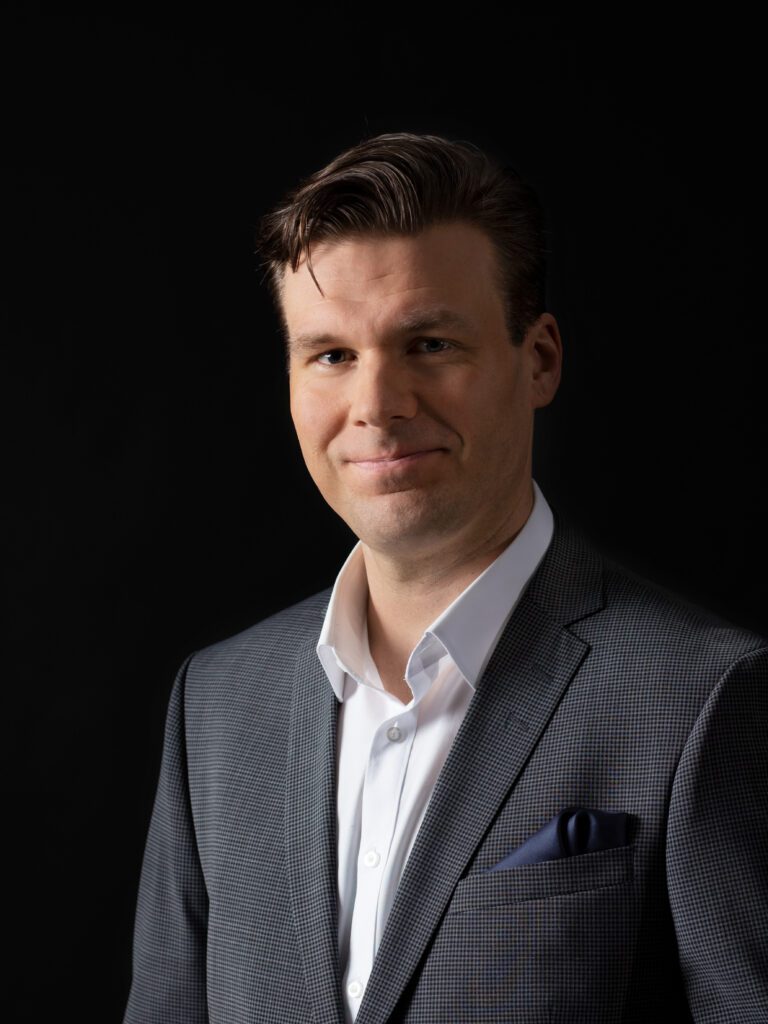
Shrikanth Kulashekhar works as a postdoctoral researcher on a project
at Aalto University and Bittium Biosignals Oy.

More information about the funded projects can be found here.

The foundation received a total of 61 high-quality applications for the call that ended on April 14, 2024, from which the board of directors decided to fund seven projects.

In 2023, the FRIF paid particular attention to encouraging industry-academia collaboration of the social sciences, humanities and arts. The foundation conducted an extensive study on the current state of industry-academia collaboration and focused its communication efforts on research organizations in these fields.

“The topics of the applications submitted to the foundation have diversified, and the range of disciplines has slightly expanded, which is what we aimed for. The quality of applications has remained high every year. A significant portion of the applications still comes from fields traditionally involved in industry collaboration, such as engineering and medicine, but we have now seen that business studies and multidisciplinary researchers, for example in environmental research, have also discovered our funding,” says Lauri Oksanen, chairman of the foundation’s board.

In the Tandem Industry Academia funding program, a researcher representing a university or research institution conducts one year of research related to the project within an academic organization and another year in closer collaboration with the partner company.

New funding to open in September for international top researchers who have recently arrived in Finland

On September 2, 2024, the FRIF will pilot a new funding program aimed at researchers who have recently entered the Finnish funding system. The goal of this funding is to initiate and accelerate the research work and industry collaboration of top talents who have come to Finland. The new TIA Seed call seeks significant breakthroughs that will contribute to the development of Finnish expertise.

“The foundation has recognized that top researchers who have recently arrived in Finland need special support to integrate into the Finnish research funding system and society. Our contribution to this is kick-start funding to boost industry collaboration in Finland. Researchers who have recently come to Finland from abroad do not have the same networks and opportunities as those who have been working here longer,” says Oksanen.

Alongside the new TIA Seed call, the foundation’s TIA Professor call will also open, intended for professors to conduct one year of research within a company.
Filed Under: Blog

TIA Professor & TIA Seed Call Opens 2.9. – Register for the Info Webinar!

16.8.2024 by vaikuttavuussaatio

Alongside the third TIA Professor call, the Finnish Research Impact Foundation is launching a new TIA Seed funding call. The new Seed funding is aimed at researchers who have recently entered the Finnish research funding system.

You are invited to the joint call info webinar for TIA Professor 2024 and the new TIA Seed funding calls. The info session will be held online on Monday, 2 September 2024, from 9:30 to 11:00. During the event, you will learn more about the Finnish Research Impact Foundation’s funding schemes for professors and have the opportunity to ask questions about the application process.

TIA Professor funding is designed to support collaboration between industry and research organizations, providing professors with first-hand knowledge of relevant research areas that are of interest to businesses. Projects may include pre-competitive research and other supportive activities.

TIA Seed funding is intended for researchers who have recently entered the Finnish research funding system, are in the early stages of their careers, and are on the professor career path. The purpose of this funding is to help initiate and accelerate both research work and business collaboration. The call seeks significant initiatives that contribute to the development of Finnish expertise.

The call for applications for both programs is open from 2 September to 13 October.

Join our info session to learn more about the TIA Professor and TIA Seed calls and to get answers to your questions. The event will be held via Zoom. Register for the info webinar here, and you will receive a link to the event in a confirmation email.

We look forward to seeing you there!

Filed Under: Blog

Towards Practice-Inspired Basic Research

26.6.2024 by vaikuttavuussaatio

The reality of research is more versatile than the often sharp division between basic and applied research suggests. Even the creation of entirely new scientific knowledge benefits from solving practical problems.

The traditional view from the 1940s (e.g. Vannevar Bush) suggests that new knowledge is created in basic research, which is then used to solve practical questions in applied research, followed by (product) development, and finally production. This description links research goals and outputs with specific process stages. Reality, however, is not that straightforward and simple.

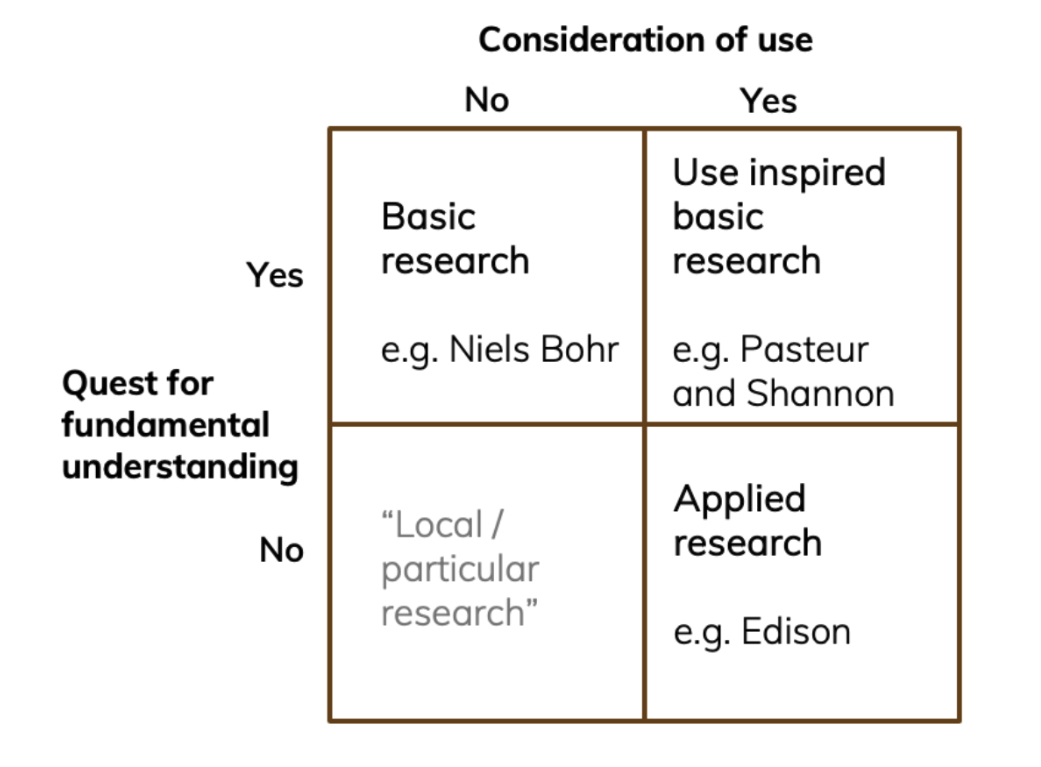
Research goals can be categorized based on whether they involve generating new fundamental knowledge or targeting specific usage (see: Donald Stokes). This creates a four-quadrant model (Figure 1), where traditional basic research focuses on increasing understanding and applied research on solving problems. Examples of the former include Niels Bohr and the latter Thomas Edison.

Figure 1. Use inspired basic research aims to deliver both fundamental knowledge and usable results.


The four-quadrant model also reveals a new area that we can call “practice-inspired basic research”, and which Stokes has named Pasteur’s quadrant. In this quadrant, the aim is both to create new knowledge and solve practical problems. A good example is Louis Pasteur, who was asked to solve issues in wine production, leading to further research and his significant role as a founder of microbiology. Another example from a different field is Claude Shannon, whose work at Bell Laboratories aimed at improving the efficiency of data transmission, leading him to explore the limits of efficiency and develop information theory. In both cases, the key to their groundbreaking scientific achievements was not isolation in a research chamber, but openness to the environment, the opportunity and resources to follow new questions, and the ability to create entirely new knowledge.

In reality, the boundaries in the four-quadrant model are not absolute, and research and researchers can move back and forth depending on the subject and stage of the research. Like Pasteur and Shannon, one way to move and enrich work is through collaboration with industry. Many researchers funded by the The Finnish Research Impact Foundation (FRIF) have shared how eye-opening and inspiring working together with industry has been. In addition to new questions, industry can also offer science resources such as data, materials, or equipment that are otherwise inaccessible.

It is time to forget the sharp division between basic and applied research and look for ways in which practical work and research can serve each other’s goals.

Lauri Oksanen, Chairman of the Board, FRIF

This article is based on a presentation given at the FRIF’s 5th-anniversary seminar. Read more about the foundation’s impact assessment here.

Filed Under: Blog

The new TIA Seed funding call aimed at strengthening Finland’s expertise will open alongside the TIA Professor call on 2.9.2024

4.6.2024 by vaikuttavuussaatio

Enhancing Finland’s international competitiveness requires attracting and integrating top-level experts into domestic research and business activities. The Finnish Research Impact Foundation (FRIF) is piloting a new Tandem Industry Academia Seed funding program. This Seed funding is intended for researchers who have recently entered the Finnish research funding system, are in the early stages of their careers, and are on the professor career path. The purpose of this funding is to help initiate and accelerate both research work and business collaboration. The call seeks significant initiatives that contribute to the development of Finnish expertise.

More information about the TIA Seed call will be published on the foundation’s website with the call announcement on 16.8.2024.

At the same time on 16.8. the FRIF will also announce the 3rd round of the Tandem Industry Academia Professor call. TIA Professor funding is intended for those working in professor-level positions at universities and research institutions. The funding is applied for 12 months for research conducted in collaboration with a company. During the funding period, the TIA Professor will spend an equivalent of one year in the company’s facilities. The funding can be distributed over a maximum of 3 years. You can review the 2023 TIA Professor call announcement and guidelines here.

The TIA Seed and TIA Professor calls will be open from 2.9. to 13.10.2024. An info session about the calls will be held on 2.9.2024. More information and registration details will be published on 16.8.2024.

Filed Under: Blog

The innovation system needs contributions from all scientific disciplines

30.5.2024 by vaikuttavuussaatio

The innovation system needs contributions from all scientific disciplines

The theme for the Finnish Research Impact Foundation’s fifth operational year was to promote collaboration between research in the social sciences, humanities, and the arts and businesses.

The Foundation investigated the current state of industry collaboration within SHAPE disciplines and initiated discussions on their role within the innovation system.

SHAPE, an acronym for “Social Sciences, Humanities, and the Arts for People and the Economy,” is a movement originating from the UK aimed at promoting the role of social sciences and humanities in innovation. It highlights the significance of these fields in driving societal and economic development. 

SHAPE disciplines can play a significantly larger role in companies’ research and development (R&D). Successful innovations often stem from a diverse group of experts bringing new perspectives and creative solutions.

The UK has recently recognized the importance of social sciences in the research and innovation landscape. A recent report by Professor James Wilsdon (University College London) and colleagues underscores the vital yet often poorly understood role of social sciences in the UK’s current R&D system. The report outlines four themes through which social sciences can enhance the innovation system: 1) systemic thinking to help businesses understand the dynamics of innovation at a systemic level, 2) the development of evidence-based policy, 3) the creation of responsible and smart innovations with ethical and legal frameworks, and 4) the enhancement of international collaboration to address global challenges and strengthen national competitiveness.

Wilsdon argues that UK government policy has recently focused too narrowly on science and technology. He advocates for a shift to include social sciences in multidisciplinary R&D efforts. The adoption of innovations often requires interdisciplinary expertise, as they are not just about technology but also relate to aspects such as human behavior and political decision-making.

SHAPE cooperation can also be relevant for the development of intangible assets, such as brands, data, software, and intellectual capital. Intangible assets are crucial for economic value creation, but current understanding is incomplete. ETLA Economic Research is currently studying the creation, accumulation, and utilization of intangible assets. A multidisciplinary approach could bring new insights into their development, such as understanding sustainable consumer brands, ethical data use, and creative processes.

Wilsdon’s report prompts questions on how to practically advance multidisciplinary collaboration. Strategic changes are needed in both businesses and research organizations to integrate social sciences and also other SHAPE disciplines into innovation activities. Promoting collaboration is essential, but there are also obstacles to overcome.

The Foundation’s SHAPE report identified barriers such as lack of time and contacts, financial constraints, and lack of mutual understanding. Researchers mentioned the benefits of collaboration as increased research impact, expanded networks, and the generation of new research ideas. From the business perspective, collaboration with shape disciplines brings tangible benefits like developing new services, absorbing new knowledge, and enhancing skills.

To foster collaboration, it is crucial to allocate sufficient resources, promote networking, increase funding, and enhance mutual understanding between academic research and the business sector. Multidisciplinary collaboration would not only benefit researchers and businesses but also society as a whole, providing sustainable and humane solutions to future challenges.

Petro Poutanen, CEO
The Finnish Research Impact Foundation

Filed Under: Annual Report 2023

New Assessment: Finnish Research Impact Foundation Funding Encourages Researchers to Join Companies

27.5.2024 by vaikuttavuussaatio

Moni tutkija on saanut rahoituksen kautta innoituksen työskennellä yksityisellä sektorilla tutkimustehtävissä. Säätiön vuonna 2020 rahoittamista yhdestätoista hankkeesta on siirtynyt viisi tutkijaa yrityselämään.

Akateemisille huippututkijoille suunnattu rahoitus on tuottanut korkeatasoista tutkimusta ja tiivistänyt yhteistyötä suomalaisten yritysten ja yliopistojen sekä tutkimuslaitosten välillä. Vuonna 2019 perustettu Vaikuttavuussäätiö on rahoittanut yhteensä 49 huippututkijoiden ja yritysten tiiviiseen yhteistyöhön perustuvaa hanketta Suomessa. Rahoitusta on myönnetty 9 miljoonaa euroa Tandem Industry Academia eli TIA-rahoituksen kautta.

Vuonna 2020 käynnistyneestä yhdestätoista TIA-hankkeesta työllistyi viisi postdoc-tutkijaa yritykseen hankkeen aikana tai sen jälkeen. Yksi heistä on Dilek Cakiroglu, joka muutti Suomeen Ranskasta TIA-hanketta varten. Siellä hän oli työskennellyt viisi vuotta postdoc-tutkijana. Cakiroglu tiesi, että teollisuuden puolelle siirtyminen on sitä vaikeampaa, mitä pidempään on ollut akateemisessa maailmassa. Siksi yrityksen kanssa yhteistyössä tehtävä projekti Aalto-yliopistossa houkutteli. TIA-hankkeen jälkeen Cakiroglu on työllistynyt Suomeen Beneq-nimiseen, puolijohdeteknologiaan erikoistuneen yritykseen. Työpaikka on tuonut paljon uusia kontakteja ja siten auttanut integroitumista suomalaiseen yhteiskuntaan.

Dilek Cakiroglu muutti Suomeen Ranskasta TIA-hanketta varten tekemään post doc -tutkimusta.

“Tutkijana työskentelin yhdessä ainoastaan kolmentoista hengen kanssa ja tunsin vain heidät. Yritysyhteistyöprojektissa tutustuin sekä yrityksen johtoon että heidän verkostoihinsa. Yrityskumppanimme johtajat tunsivat nykyisen työnantajani johtajat ja se varmasti auttoi tämän työpaikan saamisessa”, Cakiroglu sanoo.

Vaikuttavuussäätiö käynnisti syksyllä 2022 oman rahoitustoimintansa vaikuttavuuden kartoittamisen jota säätiössä on toteuttanut vaikuttavuusasiantutija, KTT Outi Vanharanta. 

“On ollut hienoa huomata miten moninaisia vaikutuksia tiiviillä tutkimusyhteistyöllä voi olla. Tutkijan läsnäolo yrityksessä mahdollistaa tehokkaan tiedonvaihdon ja keskinäisen oppimisen, vahvistaen yritysten tutkimusosaamista ja tutkijoiden kykyä soveltaa tutkimustuloksia käytäntöön. Tutkimus–yritys-yhteistyöllä on paljon vaikutuksia joita ei voida määrällisesti mitata, mutta jotka on tärkeää huomioida arvioitaessa yhteistyön vaikuttavuutta”, sanoo vaikuttavuusasiantuntija Outi Vanharanta.

Tutkimusyhteistyö kannustaa pitkäjänteiseen yhteistyöhön

Tähän mennessä päättyneet hankkeet ovat raportoineet keskimäärin kolme hankkeen aikana julkaistua tieteellistä artikkelia tai konferenssijulkaisua. Peräti 80 prosenttia hankekumppaneista aikoo jatkaa yhteistyötä TIA-hankkeen jälkeen.

Tällä hetkellä 70 prosenttia päättyneistä hankkeista on saanut tai hakenut jatkorahoitusta. Esimerkiksi vuonna 2020 Vaikuttavuussäätiö rahoitti Aalto-yliopistossa työskentelevän professori Mikko Möttösen hanketta “Constituents of a Quantum Computer”, joka toteutettiin yhdessä kvanttiteknologiaan keskittyvän yrityksen IQM Finlandin kanssa. Möttösen tutkimushanke sai TIA-rahoituksen päätyttyä Euroopan tutkimusneuvostolta (ERC) 2,5 miljoonan euron kilpaillun ERC Advanced Grant -apurahan. TIA-hankkeen tuloksena syntyi unimon-kubitti eli esiaste ERC-hankkeessa jatkokehitettävälle kubitille.

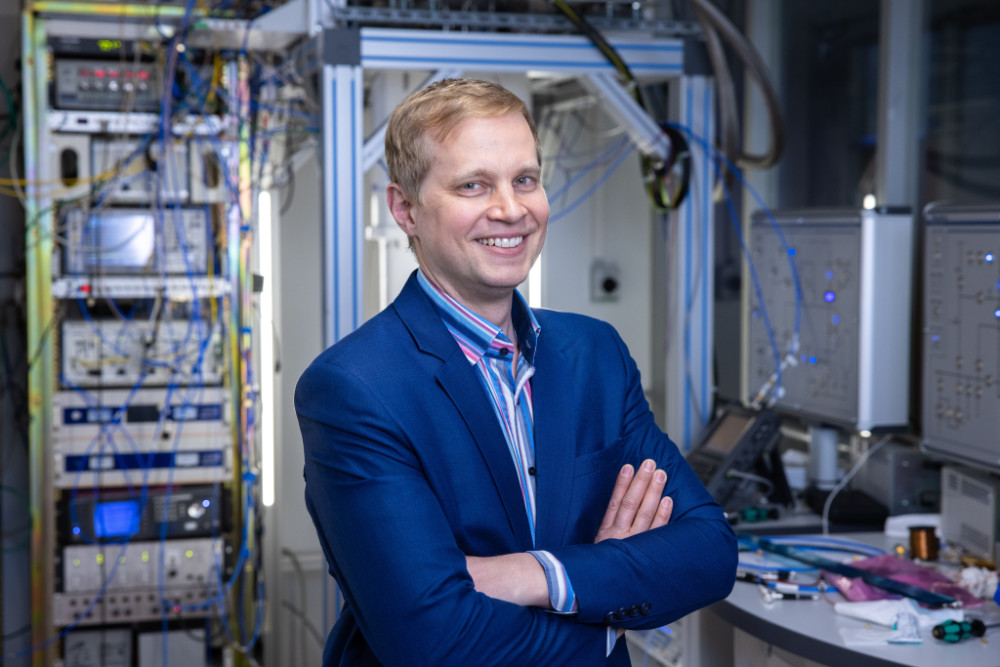
Professori Mikko Möttönen työskentelee Aalto-yliopistossa ja tutkii ja kehittää kvanttiteknologiaa.

Kubitti on yhdistelmä sanoista kvantti ja bitti ja on siis kvanttitietokoneen rakennuspalikka, joka välittää, säilöö ja prosessoi tietoa.

“Nyt tehtävän jatkokehityksen pyrkimyksenä on näyttää, että kehittämämme kubitti on ylivertainen. Vasta sitten kubittia voidaan soveltaa kaupallisissa kvanttitietokoneissa”, Möttönen sanoo.

Möttöstä ilahduttaa tutkijana erityisesti sellainen vaikuttavuus, “jossa keksitään jotain niin suurta, että se laittaa monen tiedemiehen rahoitukset uudelle raiteelle.” Entistä tarkemman kubitin kehittämisellä saattaa hyvinkin olla juuri tällainen vaikutus.

“Näemme rahoituksemme tärkeänä siltana tutkimusideoille, joita voidaan viedä akateemisen ja yritysmaailman yhteistyön kautta käytäntöön ja saada vaikutusta aikaan. Samalla rahoitus tukee huipputiedettä ja on ollut monille tutkijoille ponnahduslauta heidän akateemisella urallaan tai tie yritysmaailmaan”, sanoo Vaikuttavuussäätiön hallituksen puheenjohtajan Lauri Oksanen.

Säätiön vaikuttavuusarvioinnin perusteella 83 prosenttia yrityksistä pystyy hyödyntämään hankkeessa syntyneitä tutkimustuloksia jollain tavalla omassa toiminnassaan. Arvion mukaan puolessa päättyneistä TIA-hankkeista on syntynyt konkreettisia ratkaisuja, kuten algoritmeja, sovelluksia tai teollisia materiaaleja, hyödynnettäväksi teollisuudessa.

Säätiön rahoituksen ensisijainen tavoite on ollut yhteistyön tiivistäminen ja huippututkimuksesta ponnistavien innovaatioiden ruokkiminen yritysyhteistyön avulla. Moni hankkeissa työskennellyt tutkija on lisäksi siirtynyt yritysmaailman palvelukseen TIA-hankkeen jälkeen.

Säätiö seuraa jatkossa rahoituksensa vaikuttavuutta nyt kehitettyjen mittareiden avulla ja päivittää tarvittaessa vaikuttavuuden mittareitaan. Nyt toteutettu selvitys on kokonaisuudessaan luettavissa säätiön verkkosivuilta osoitteesta www.vaikuttavuussaatio.fi/vaikuttavuusarviointi

Filed Under: Blog

  • « Go to Previous Page
  • Page 1
  • Page 2
  • Page 3
  • Page 4
  • Page 5
  • Page 6
  • Interim pages omitted …
  • Page 15
  • Go to Next Page »

Footer

Vaikuttavuussäätiö

Eteläranta 10, 00130 Helsinki
+358 40 767 1631
petro (at) vaikuttavuussaatio.fi

Billing Information →

  • Facebook
  • Instagram
  • LinkedIn
  • Twitter

Privacy Policy →

Copyright © 2025 Vaikuttavuussäätiö