
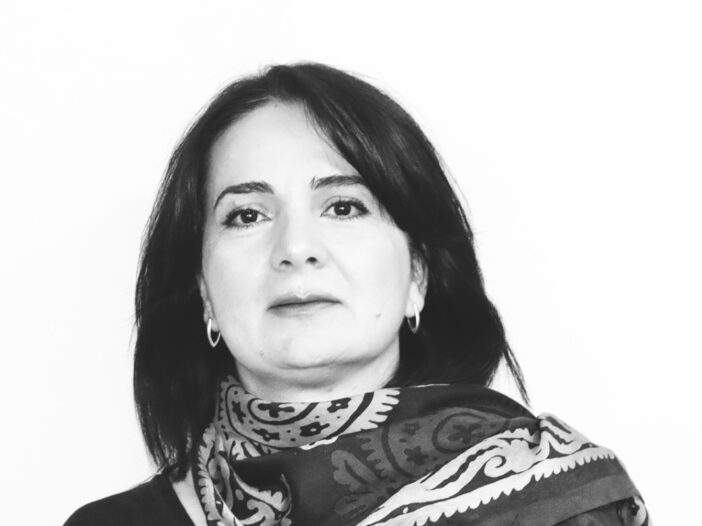
The project led by Yagut Allahverdiyeva-Rinne identified microalgae that can be utilised in purifying greenhouse wastewater. The findings of the joint project between the University of Turku and Oksasen puutarha support the circular economy and sustainable food and agrichemicals production in greenhouse cultivation. The funding from the FRIF enabled cooperation, where academic expertise was taken outside the research bubble to solve practical problems.
Project title: Integration of greenhouse farming and microalgae bioproduction for a sustainable circular agriculture approach (AgriAlga)
Principal investigator of the project: Yagut Allahverdiyeva-Rinne, University of Turku
Project partners: University of Turku & Oksasen puutarha
FRIF funding awarded: €214,326
Climate change challenges food production both in Finland and globally. At the same time, the need for resource-wise production methods is growing. The joint AgriAlga project between the University of Turku and Oksasen puutarha investigated how microalgae can be utilised in greenhouse cultivation and the treatment of its side streams.
“The aim of the project was to upgrade nutrient rich, drain water from a greenhouse by using a nutrient source to produce the algae biomass. The resulting biomass can be further processed and used as a novel agrichemical or fertilizer for different purposes in the greenhouse. Like this, we could create a circular sustainable system for greenhouse producers”, says Yagut Allahverdiyeva-Rinne, Professor of Molecular Plant Biology at the University of Turku and Principal Investigator of the AgriAlga project.
Algae offer solutions to many challenges
Allahverdiyeva-Rinne is a photosynthesis researcher by background. Her research group investigates how plants and photosynthetic microbes – such as algae and bacteria – harvest solar energy to fix CO2 into biomass, and how this knowledge can be utilised in new bioproduction technologies.
In the North, algae production throughout the year is challenging due to low temperature and limited daylight during autumn and winter. However, both of these are found in greenhouses all year round. One of Allahverdiyeva-Rinne’s research lines is therefore the utilisation of algae in greenhouses.
“Algae don’t need land, they only need some nutrients, light, water and that water doesn’t need to be fresh water, it can be seawater or it can be suitable wastewater streams,” explains Allahverdiyeva-Rinne.
Growing algae in greenhouses also helps with another problem, namely greenhouse wastewater, the nutrients of which, carried along with the water, eutrophicate water bodies. This also made Oksasen puutarha interested in the possibilities of algae.
Oksasen puutarha is a family business that grows salads and herbs in Turku, Oripää and Hamina. The company needed to understand how it could purify the circulating water in the greenhouses and potentially reuse it.
“Before this project, we knew nothing about growing algae,” laughs Juha Oksanen, Chair of the Board of Oksasen puutarha.
Project results accelerate the circular economy
Researchers examined the properties of dozens of different algae types and identified a couple of algae that thrive in greenhouse conditions. After this, the researchers grew algae cultures, using a nutrient-rich side stream from the Oksasen puutarha greenhouse as their nutrient source.
The most promising culture was successfully scaled up to a 50-litre bioreactor. The researchers also tested how the biomass produced in the process is suitable for agricultural use.
“Microalgae cultivation provides an efficient and scalable solution for treating side streams from horticultural greenhouses, enabling nutrient recovery while complying with EU discharge limits. The process is highly adaptable, allowing the operational strategy to be tailored for hydroponic or soil-based systems and adjusted according to the nutrient load of the effluent,” says Allahverdiyeva-Rinne.
“For example, a 1000 liter photobioreactor can effectively treat about 300 liters of typical effluent containing 100 milligrams of nitrogen per liter daily. This capacity enables a small commercial greenhouse to manage and treat a substantial portion — if not all — of its daily nutrient-rich drainage. The resulting algal biomass is a valuable product that supports circular use of resources.”
The results of the project’s invention disclosures have not yet been confirmed, so the more precise final results of the studies are still confidential. However, Allahverdiyeva-Rinne is convinced that the project results will accelerate both the circular economy and sustainable development.
“From our point of view, the project gave positive results. Related to social or broader impact, I think what we are doing directly contributes to several Sustainable Development Goals. It also promotes more sustainable bioproduction, and the best use of the resources.”
Funding from the FRIF offered a route outside the research bubble
Allahverdiyeva-Rinne thanks the Finnish Research Foundation’s (FRIF) TIA Postdoc funding for offering researchers a route outside the university walls.
“For us, I believe that this funding opportunity has been extremely important because it really gave us the possibility to work in close collaboration with the industrial partner. This allowed us to align not only our scientific curiosity, but also the needs and the priorities of the industrial sector,” she says.
Oksasen puutarha, in turn, gained new knowledge through the cooperation on how to solve the problems arising from their wastewater. Generally, the cooperation brought a new way of thinking to the company.
“This very benefit for us from being in this project is that now we think about things a little bit differently. We know what are the key points that we have to solve and can concentrate on the things that we can do,” says Oksanen.
The journey towards an algae-based circular economy continues
The cooperation between Allahverdiyeva-Rinne’s research group and Oksasen puutarha will continue in the future. The broader AlgaCircle consortium coordinated by Allahverdiyeva-Rinne received over a million euros in funding from Business Finland’s Veturi program in 2024.
The goal of the consortium is to create a broader circular economy model in which microalgae are used to produce food, feed, and agricultural chemicals. Oksasen puutarha is one of the consortium’s corporate partners.
The heart of AlgaCircle is the AlgaTech algae production facility, which was opened in 2024 at the Ruissalo Botanical Garden in Turku. The facility has excellent frameworks for the production and research of microalgae cultures – the facility’s largest bioreactor has a capacity of a thousand litres.
AgriAlga was thus just the beginning. The journey towards an algae-based circular economy is in full swing in Turku!
FRIF’s TIA Postdoc grants can be applied for again in spring 2026. Read more about upcoming grant calls.