
Finnish SMEs are keen to make good use of science and research but do not see sufficiently robust benefits or relevant research subjects. This is the main message a new report commissioned by the Finnish Research Impact Foundation on the use of research knowledge among Finnish SMEs. At the same time, though, half of the companies represented in the survey said they would want to take a driving role in research utilization.
Download report in Finnish
Format: pdf
Size: 1,3MB
The research for the report addressed the motives, benefits and barriers to research utilization. It was conducted by a team of three Doctors of Science in Technology from LUT University (Lappeenranta-Lahti University of Technology): Tero Rantala, Minna Saunila and Juhani Ukko.
The survey data was collected among Finnish SMEs in March 2022. A questionnaire was sent out to management representatives of a random sample of SMEs. Responses were received from 108 different companies.
Research utilized in multiple ways – main focus on developing human skills
The report observes that Finnish SMEs place great value on the varied knowledge produced by universities and research institutes and on the utilization of that knowledge.
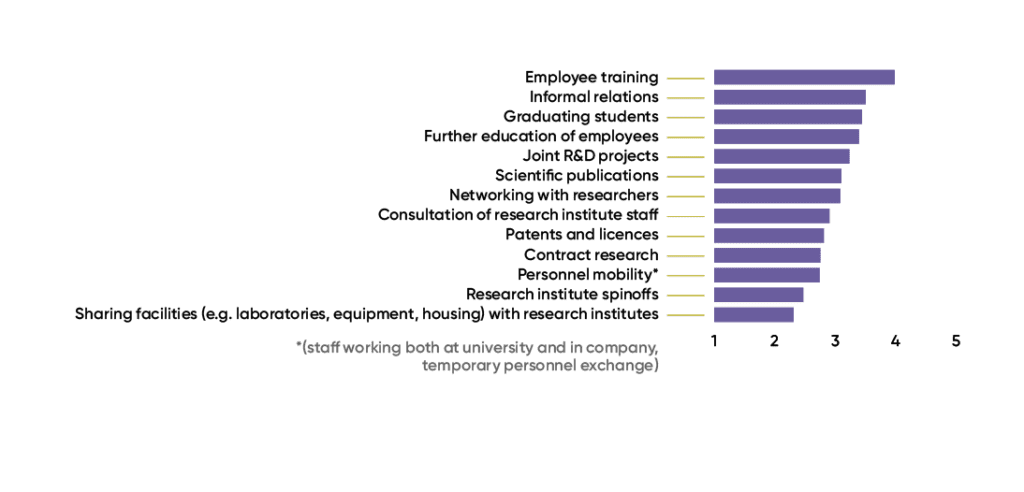
Analysis of the data showed that the main benefits gained from research were explained by successful R&D projects, research institute spinoffs, contract research projects, and patents and licences.
According to the respondents, however, the most significant forms of research utilization were training and education (identified as significant by 77%) and informal relations (59%).
Absence of relevant research considered major barrier to utilization
The single biggest barrier to making good use of research excellence was thought to lie in the absence of relevant research for SMEs’ own needs and purposes: 76% of SMEs said that research was not addressing practically relevant issues – or at least the respondents said they were not aware of such research. Other major barriers to research utilization were the absence of perceived benefits from research to the business, time pressures and lack of funds.
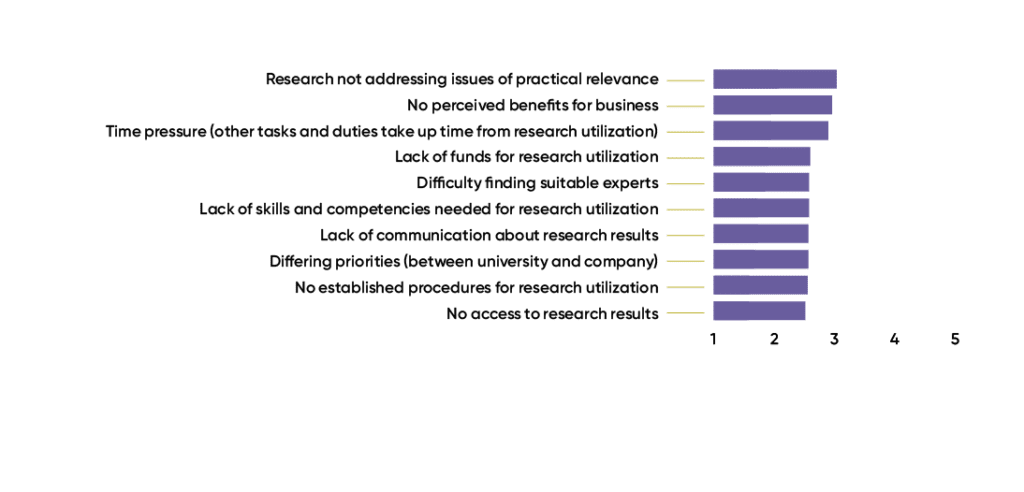
“We were all quite taken aback by the finding that many SMEs also thought communication about research results was a major barrier to research utilization. It’s clear that researchers and research organizations need to take a hard look in the mirror and consider the ways in which we interact and communicate with SMEs and maintain meaningful and relevant contact with them,” says Tero Rantala, one of the lead researchers on team.
Many SMEs keen to take a driving role in research utilization
Half of the respondents said the companies they represented would be keen to take a driving role in research utilization. The survey responses indicated that for these future trailblazers, lack of funds, lack of communication about research results and the absence of established procedures were more significant barriers to research utilization than for other respondents. These are predominantly service companies whose main market is not clearly limited to Finland and whose industry branch is characterized by rapid technological development and the prominence of sustainable development.
“These future trailblazers are companies that are not necessarily in the position to independently produce the research knowledge they need. Instead they have to actively look for ways to access new knowledge and skills. These types of research-hungry companies that have difficulty gaining access to research knowledge are going to have the greatest need for support in the future,” Tero Rantala continues.
Companies interested in maximizing the use of research excellence showed a more positive attitude than others to working closely with universities and other research organizations, but at the same time they were least satisfied with their current collaboration with universities and research institutes.
“SMEs don’t always find what they are looking for in the academic world. It’s possible that the needs identified by the company are so novel that research on the subject hasn’t even started yet. Or then the required dialogue is not in place and SMEs are not getting all the information about what’s going on at universities and research institutes,” Rantala says.
Lauri Oksanen, Chairman of the FRIF Board, explains the foundation’s rationale for commissioning the new report: “We wanted to gain a clearer picture of how SMEs use knowledge and how we could contribute to improving the interaction and cooperation of SMEs and research organizations. SMEs are an integral part of Finnish business and industry, but they remain an inadequately understood asset from the point of view of research utilization.”
SMEs
Statistics Finland figures for 2020 show that there are some 2,800 Finnish SMEs engaged in R&D (companies with less than 250 staff).
Figures for 2019 show that 93% of Finland’s 293,377 companies have less than 10 staff; 5.7% are small firms with less than 50 staff; 1.1% have 50–249 staff; and the remaining 0.2% are large companies with more than 250 staff.
SMEs are a major employer in Finland and have created large numbers of new jobs throughout the 2000s. The SME sector accounts for more than one-half of total business turnover in Finland and for over 40% of national GDP.
Sources: Statistics Finland and Suomen Yrittäjät.